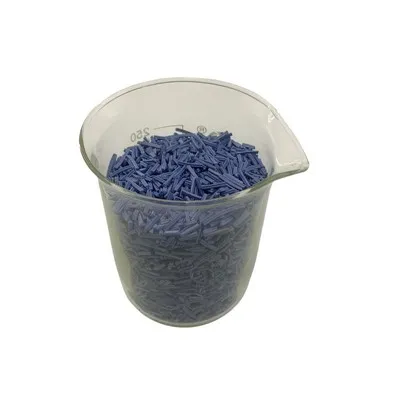
Residual oxygen in synthesis gas presents critical operational risks to downstream catalytic units, such as Fischer-Tropsch synthesis, methanol loops, and advanced hydrogenation processes, where even trace levels of oxygen can degrade downstream catalyst activity and shorten operating cycles.
An oxygen removal catalyst provides a fixed-bed catalytic solution designed to reduce residual oxygen directly via controlled chemical reaction rather than physical separation. Effective reactor performance, catalyst grading, and bed sizing depend directly on feed gas composition, target outlet oxygen limits, operating temperature, pressure, and space velocity.
Technical Specifications and Sizing Parameters
|
Process Parameter |
Operating Range and Unit |
Engineering Significance |
|
Feed Gas Matrix |
Syngas (H2 / CO / CO2 / CH4) |
Defines the reducing environment and potential contaminants |
|
Inlet Oxygen Concentration |
ppm or vol.% |
Determines total reaction duty and thermal release |
|
Target Outlet Oxygen |
ppm (maximum allowable) |
Sets required kinetic activity and bed depth |
|
Moisture (H2O) |
vol.% or dew point |
Influences low-temperature stability |
|
Sulfur Contaminants |
H2S, COS (ppm) |
Critical for active phase and poison-resistance selection |
|
Operating Temperature |
Degrees Celsius (normal / maximum) |
Controls reaction rates and thermodynamic boundaries |
|
Operating Pressure |
MPa / bar |
Affects gas density and residence time |
|
Space Velocity (GHSV) |
Inverse hour |
Direct factor for catalyst volume calculation |
|
Allowable Pressure Drop |
kPa / bar |
Limits maximum acceptable fixed-bed flow resistance |
Key Performance Factors and Process Compatibility
Inlet Oxygen Fluctuations
Unsteady-state oxygen excursions demand adequate kinetic and thermal margins within the catalyst bed design to prevent downstream breakthrough.
Moisture and Impurities (CO2 and Sulfur)
Water vapor, carbon dioxide, and trace sulfur compounds (H2S, COS) interact dynamically with active sites. Catalyst selection must account for these trace constituents to maintain sustained performance over multi-year operating campaigns.
Space Velocity (GHSV) and Contact Time
Gas hourly space velocity dictates the residence time across the fixed bed. Higher space velocities require optimized particle geometry and high low-temperature activity.
Typical Applications
Synthesis gas purification following gasification, steam reforming, or partial oxidation
Synthesis gas purification following gasification, steam reforming, or partial oxidation
Syngas treatment prior to commercial methanol synthesis units
Removal of residual oxygen in hydrogen and carbon monoxide process streams
Protection of downstream oxygen-sensitive catalytic systems
Industrial gas purification plants requiring continuous catalytic deoxygenation
Reaction Principle
The catalyst facilitates the chemical reaction of residual oxygen with active reducing components natively present within the synthesis gas matrix.
Depending on the specific upstream process conditions, the primary reactions involve available hydrogen and carbon monoxide:
2H2 + O2 -> 2H2O
2CO + O2 -> 2CO2
The reaction pathway and target conversion efficiency are governed by the gas composition, active catalytic phase, and operating temperature window, aiming to achieve complete oxygen reduction without inducing excessive consumption of valuable hydrogen or carbon monoxide.
Physical Properties, Manufacturing and Quality Control
Fixed-bed catalyst production adheres to strict batch-release criteria to guarantee mechanical and chemical consistency:
Physical Form
Extrudate, Sphere, or Pellet (tailored to vessel geometry)
Bulk Density and Mechanical Strength
Engineered to minimize attrition and withstand high fixed-bed mechanical loads
Quality Assurance
Verification of active component loading, specific surface area, pore volume distribution, and crush strength per manufacturing lot
Handling, Packaging and Storage
Packaging: Moisture-barrier steel drums or certified flexible intermediate bulk containers designed to prevent environmental exposure during international logistics.
Storage Recommendations: Keep in a dry, ventilated indoor area away from direct moisture and volatile chemical vapors prior to commercial loading.
FAQ
Q: What is the typical service life of the catalyst under continuous operation?
A: Service life depends heavily on the stability of the feed gas composition, particularly inlet oxygen fluctuations, moisture levels, and the presence of catalyst poisons such as sulfur compounds. When operated within recommended temperature windows and gas hourly space velocities, industrial fixed-bed installations typically achieve multi-year operating cycles before replacement or regeneration is required.
Q: Can this catalyst operate under high moisture or carbon dioxide conditions?
A: Yes, the formulation can accommodate specified levels of water vapor and carbon dioxide. However, because high moisture or elevated carbon dioxide concentrations can influence low-temperature activity and reaction equilibrium, these constituents must be fully disclosed during the technical evaluation phase so the appropriate grade and bed depth can be selected.
Q: What is the procedure if the feed gas contains trace sulfur compounds?
A: Trace sulfur compounds such as hydrogen sulfide and carbonyl sulfide can act as catalyst poisons depending on the active phase. If sulfur is present in the feed, pre-guard beds or sulfur-tolerant catalyst formulations must be utilized. Providing total sulfur ppm levels during initial inquiry ensures proper upstream protection and catalyst selection.
Q: How is the required catalyst volume calculated for a fixed-bed reactor?
A: Catalyst volume is determined by evaluating the design gas flow rate, operating pressure, temperature, and the target gas hourly space velocity. Process engineers calculate the necessary residence time to achieve the required outlet oxygen specification while keeping pressure drop within allowable limits for the reactor vessel.
Q: Is regeneration possible, or does the spent catalyst require replacement?
A: Depending on the specific active metal system and the nature of deactivation (such as carbon deposition or mild sulfur exposure), certain formulations allow for in-situ or ex-situ regeneration procedures. However, for deep deoxygenation applications, spent material is typically replaced at the end of its multi-year service cycle. Specific handling and disposal guidelines are provided upon request.
Hot Tags: oxygen removal catalyst for syngas, China oxygen removal catalyst for syngas manufacturers, suppliers, factory