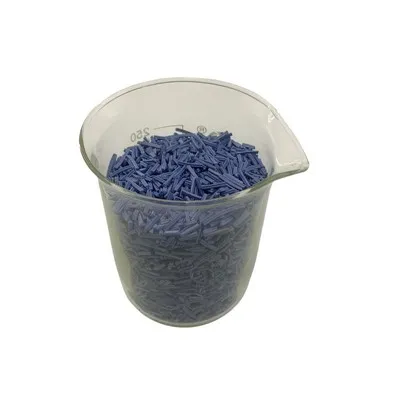
A functional sulfur recovery catalyst for Claus units designed to mitigate catalyst sulfation risks associated with trace oxygen, operating fluctuations, or excess O₂/SO₂.
The material combines Claus reaction activity with deoxygenation functionality, consuming residual oxygen in the process gas to protect downstream catalyst beds from sulfate-induced deactivation. It can be loaded as an independent bed or layered with conventional activated alumina and titanium dioxide catalysts depending on reactor design.
Core Technical Specifications (A958 Reference)
|
Property |
Specification Value |
|
Primary Active Component |
Fe₂O₃ |
|
Carrier Composition |
Activated alumina |
|
Physical Form |
Brown sphere or extrudate |
|
Specific Surface Area |
≥ 260 m²/g |
|
Bulk Density |
0.70 - 0.90 kg/L |
|
Average Crushing Strength |
≥ 130 N/grain |
|
Pore Volume |
≥ 0.20 mL/g |
|
Abrasion Loss |
≤ 0.3% |
|
Annual Supply Capacity |
approx. 9,600 metric tons |
Addressing Catalyst Sulfation in Claus Units
Catalyst sulfation is a primary deactivation pathway in industrial sulfur recovery units. When oxygen enters the process stream, sulfur dioxide undergoes further oxidation, forming stable sulfate species on active catalytic sites.
Progressive sulfation gradually diminishes available surface area and reaction activity, leading to premature catalyst replacement. This formulation is engineered for units facing:
- Trace oxygen ingress via air demand control or seal leakage
- Fluctuating acid-gas compositions and gas flow rates
- High hydrogen sulfide feed concentrations
- Unstable performance in conventional alumina beds
Functional Mechanism and Reactor Loading
The catalyst operates through a dual-function mechanism within the reaction environment:
Claus Catalytic Activity: Participates actively in the conversion of hydrogen sulfide and sulfur dioxide to elemental sulfur, achieving up to an approximate 1.7 percentage point increase in overall sulfur conversion under equivalent operating conditions.
Deoxygenation Protection: Selectively removes trace residual oxygen from the process gas, minimizing the formation of sulfate species on downstream catalyst surfaces.
Loading Configurations
Dedicated Bed: Loaded independently when both deoxygenation protection and sulfur conversion are required across the entire bed height.
Layered System: Deployed in combination with standard activated alumina or titanium dioxide catalysts. Typically, a protective layer comprising at least one-third of the total catalyst volume is recommended for retrofit applications.
Pressure Drop Management: Uniform particle sizing and high mechanical strength (≥ 130 N/grain) minimize dusting, pellet crushing, and bed compaction under high gas velocities.
Manufacturing and Quality Assurance
Consistent reactor performance requires strict control over physical structure, mechanical integrity, and batch uniformity. Production operations utilize:
Automated shaping and forming equipment
Distributed Control System (DCS) monitoring across production lines
Dedicated laboratory evaluation units simulating industrial Claus reactor conditions
Standardized testing for specific surface area, pore volume, crushing strength, and abrasion resistance
Catalyst Storage and Handling
Moisture Protection: The catalyst should be stored in a dry, covered warehouse. Pallets must not be exposed to direct weather, rain, or standing water to prevent degradation of the porous carrier structure.
Minimizing Dusting: Although the material features high mechanical strength and low abrasion loss, handling equipment should minimize free-fall drops during loading to prevent fine particle generation.
Personal Protection: Standard industrial personal protective equipment, including dust masks, eye protection, and gloves, should be used during handling and reactor loading to avoid irritation from catalyst dust.
Frequently Asked Questions
Q: Can this catalyst operate effectively in the presence of carbon dioxide or moisture?
A: Yes. The activated alumina carrier and functional formulation are engineered to maintain structural stability and catalytic performance under high-moisture and high-carbon dioxide process environments typical of sour gas and refinery acid-gas streams.
Q: What is the expected service life under normal operating conditions?
A: Service life depends heavily on feed gas cleanliness, operating temperatures, and the frequency of oxygen excursions. When operated within recommended parameters and protected from severe thermal shocks or liquid sulfur condensation, commercial installations typically achieve multi-year operating cycles before requiring replacement.
Q: How does layered loading affect overall reactor pressure drop?
A: Because the material is produced with controlled particle size distribution and high mechanical strength, layering it with conventional activated alumina or titanium dioxide does not introduce abnormal pressure drop. Proper sizing ensures smooth gas distribution across the reactor cross-section.
Q: What packaging options are available for international shipping?
A: To protect the catalyst from moisture absorption and mechanical damage during global transit, the material is supplied in sealed steel drums, heavy-duty cardboard drums, or moisture-barrier bulk bags secured on export-grade pallets.
Hot Tags: sulfation inhibition catalyst, China sulfation inhibition catalyst manufacturers, suppliers, factory