

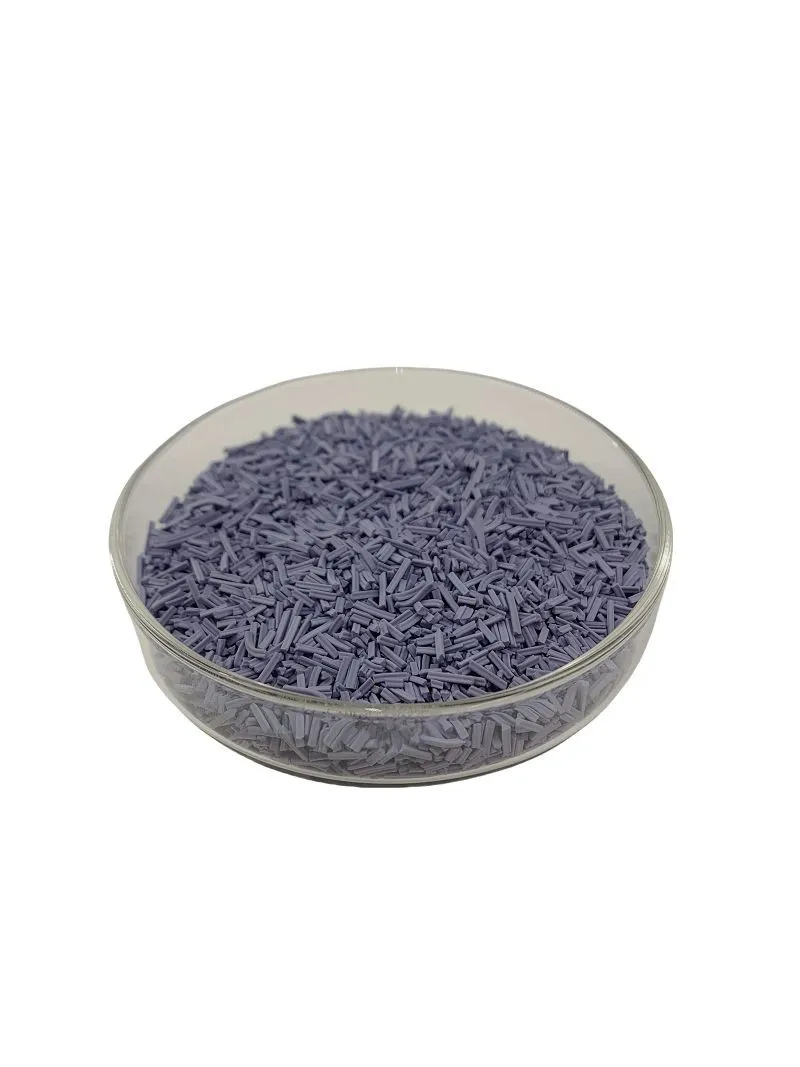
Ultra Deep HDS Catalyst is a supported hydrotreating catalyst engineered for the deep removal of sulfur compounds from petroleum and refinery feedstocks under hydrogen-rich conditions.
The formulation utilizes high-surface-area porous metal-oxide supports loaded with specialized hydrogenation-active metal components. Depending on specific feedstock characteristics and processing demands, formulations can be configured using Co-Mo, Ni-Mo, or multi-component hydrotreating systems.
It is deployed in refinery units where conventional hydrotreating configurations cannot achieve tighter sulfur specifications, or where stable, long-cycle deep desulfurization is required under demanding operating parameters.
Technical Specifications
|
Parameter |
Specification Details |
|
Product Classification |
Ultra Deep Hydrodesulfurization (HDS) Catalyst |
|
Catalyst Family |
Hydrorefining / Hydrotreating Catalyst |
|
Active Metal Systems |
Co-Mo, Ni-Mo, and promoted multi-metal oxide systems |
|
Support Material |
Modified transition alumina or composite porous support |
|
Particle Geometry |
Cylindrical or multi-lobed extrudates (tri-lobe / quadrilobe) |
|
Active Phase Composition |
CoO (3.0 - 4.0 wt%) / MoO3 (16 - 20 wt%) or equivalent Ni-Mo loading |
|
Bulk Density |
0.75 - 0.85 kg/L |
|
Specific Surface Area |
220 - 280 m2/g |
|
Total Pore Volume |
0.40 - 0.50 mL/g |
|
Crushing Strength |
>= 140 N/cm |
|
Primary Feedstocks |
Diesel, naphtha, gasoline, kerosene, and mid-distillates |
Reaction Mechanism & Performance Factors
Achieving ultra-deep desulfurization depends heavily on physical and chemical coordination within the fixed bed:
Refractory Sulfur Conversion: Effectively breaking down sterically hindered and refractory sulfur compounds (such as alkyl-substituted dibenzothiophenes) requires optimized active metal dispersion and controlled pore accessibility.
Mass Transfer Optimization: A balanced pore network ensures that large hydrocarbon molecules easily reach internal active sites without diffusion limitations.
Bed Stability: Mechanical durability and tailored particle shapes maintain low reactor pressure drop and prevent premature bed compaction over extended operating cycles.
Application-Specific Considerations
Ultra-Low-Sulfur Diesel (ULSD) Production: Applied in secondary hydrotreating units to meet stringent sulfur limits (frequently below 10 ppm). Feedstock evaluation accounts for total sulfur, polycyclic aromatics, and refractory mercaptans.
Naphtha and Gasoline Hydrotreating: Used to pretreat catalytic reforming or isomerization feeds by reducing sulfur and nitrogen compounds to protect downstream noble-metal catalysts from permanent poisoning.
Kerosene and Jet Fuel Processing: Targets deep sulfur and mercaptan removal while supporting smoke-point and density targets through controlled hydrogenation activity.
Startup, Activation & Handling Guidance
Presulfiding: Proper sulfiding protocols using dimethyl disulfide (DMDS) or equivalent spiking agents are essential to convert metal oxides into active sulfide phases prior to heavy feedstock introduction.
Loading Protocols: Uniform dense-loading or standard sock-loading techniques are recommended to eliminate channeling and ensure even gas-liquid distribution across the reactor cross-section.
Manufacturing and Quality Assurance
Catalyst reliability depends on precise chemical control during synthesis, extrusion, impregnation, and calcination. Production protocols incorporate strict analytical verification for:
- Active metal loading accuracy and uniform radial distribution
- Surface area, pore size distribution, and nitrogen adsorption isotherms
- Packed bulk density and single-particle mechanical crushing strength
- Moisture retention and attrition resistance
- Each commercial batch is delivered with standard inspection documentation covering physical and chemical property verification.
FAQ
Q: What is the standard commercial lead time for catalyst production and delivery?
A: Production timelines depend on formulation complexity and required order volume. Standard industrial quantities are typically produced and prepared for shipment within 4 to 6 weeks following technical agreement and order confirmation. Stock availability for standard active systems can be verified upon inquiry.
Q: Can custom catalyst formulations or particle geometries be developed for specialized feedstocks?
A: Yes. Formulations can be adjusted regarding active metal loadings (such as tailored Co-Mo or Ni-Mo ratios), support promoters, and extrudate geometries (including specific multi-lobed profiles) to match unique reactor hydraulics, severe inhibition factors, or difficult refractory sulfur profiles.
Q: What are the standard packaging and moisture-protection methods used for international transit?
A: Catalysts are packed in sealed steel drums or heavy-duty jumbo bags lined with moisture-barrier polyethylene layers. This packaging safeguards physical integrity, prevents mechanical attrition during ocean or land freight, and protects the material from atmospheric moisture adsorption prior to reactor loading.
Hot Tags: ultra deep hds catalyst, China ultra deep hds catalyst manufacturers, suppliers, factory


