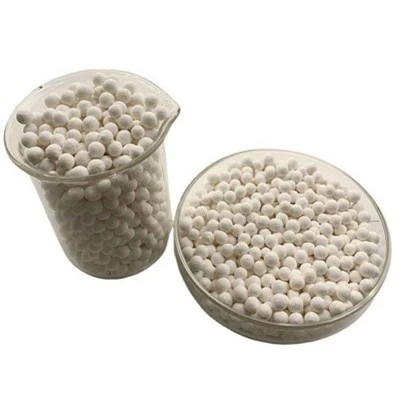
This multi-metallic hydrotreating catalyst is engineered with a molybdenum-tungsten-nickel active phase supported on modified alumina. It is specifically designed for refinery units performing diesel hydrotreating, deep hydrodesulfurization (HDS), and deep hydrodenitrogenation (HDN).
By pairing a robust trimetallic active composition with a high-surface-area carrier, the catalyst provides the required activity and stability for processing middle and heavy distillates under demanding commercial reactor conditions.
Technical Specifications & Reference Operating Window
|
Technical Parameter |
Specification Value |
|
Catalyst Type |
Supported multi-metallic hydrotreating catalyst |
|
Active Components |
MoO3-WO3-NiO |
|
Support Material |
Modified Al2O3 |
|
Catalyst Geometry |
Clover extrudate |
|
Particle Size |
1.6 - 3.0 mm |
|
Bulk Density |
0.80 - 0.88 kg/L |
|
Average Side Crush Strength |
>= 150 N |
|
Specific Surface Area |
>= 120 m2/g |
|
Pore Volume |
>= 0.25 mL/g |
|
Minimum Order Quantity (MOQ) |
1 metric ton |
|
Quality Management |
ISO 9001:2015 |
Active Phase and Support Architecture
Trimetallic Active System (MoO3-WO3-NiO)
The formulation incorporates molybdenum, tungsten, and nickel. The tungsten component provides structural stability and high activity for feeds with heavy sulfur/nitrogen loads, while the nickel promoter drives the hydrogenation function necessary for breaking carbon-sulfur and carbon-nitrogen bonds.
Modified Alumina Carrier
Catalyst performance relies heavily on active metal dispersion. This product utilizes a modified alumina support engineered to maintain a specific surface area of >= 120 m2/g and a pore volume of >= 0.25 mL/g. The clover-shaped extrudate geometry (1.6 - 3.0 mm) ensures uniform void fraction distribution, minimizes pressure drop across the reactor bed, and maintains structural integrity.
Catalyst Activation, Sulfiding & Cycle Operation
Pre-sulfiding Requirement: Like all commercial industrial hydrotreating catalysts, proper activation via in-situ or ex-situ sulfurization (using spiking agents like DMDS) is required to convert metal oxides into active metal sulfides.
Inhibition Management: The presence of high concentrations of organic nitrogen and basic nitrogen compounds can temporarily inhibit deep HDS activity. The trimetallic formulation is balanced to mitigate nitrogen inhibition under standard commercial operating envelopes.
Cycle Length & Deactivation: Long-term cycle performance depends on stable reactor temperatures, hydrogen partial pressure control, and the minimization of coke precursors through effective feedstock pre-filtration.
Mechanical Integrity and Reactor Loading Protocols
With an average side crush strength of >= 150 N, the catalyst resists crushing and fines generation during dense loading and long-term operation.
Handling Guidelines:
Store in dry conditions protected from moisture and humidity.
Avoid dropping or mechanical shock to prevent extrudate breakage.
Screen the catalyst to remove broken fragments prior to loading.
Employ standardized dense-loading techniques to ensure uniform radial void distribution and prevent channeling.
Manufacturing Capacity and Quality Control
Production Infrastructure: Manufactured across three dedicated catalyst production lines with a combined annual capacity of approximately 9,500 - 9,600 tons.
Process Control: Monitored via a distributed control system (DCS) governing chemical precipitation, drying, and high-temperature calcination.
Batch Verification: Physical and chemical properties-including crush strength, surface area, pore distribution, and metal loading-are verified in-house. Each commercial shipment is accompanied by a Certificate of Analysis (COA) conforming to ISO 9001:2015 standards.
Packaging, Logistics and Sample Policy
Packaging Options
Supplied in heavy-duty steel drums (approx. 120 - 180 kg net weight) or moisture-resistant composite bags.
Export Terminals
Regular dispatch through primary ports including Shanghai, Ningbo, Shenzhen, and Qingdao.
Sample Policy
Laboratory test samples are available for technical evaluation (express shipping costs apply).
FAQ
Q: What is the recommended start-up sulfiding procedure for this catalyst?
A: The catalyst must be presulfided prior to processing commercial feedstocks to convert the metal oxides into active metal sulfides. This is typically executed via in-situ liquid-phase sulfiding using a spiking agent such as dimethyl disulfide (DMDS) blended into a straight-run gas oil or naphtha carrier stream under controlled hydrogen pressure and temperature ramping. Specific activation temperature plateaus should follow standard refinery hydroprocessing protocols.
Q: How does the trimetallic active phase handle refractory sulfur compounds?
A: Refractory sulfur species, particularly sterically hindered dibenzothiophenes substituted at the 4 and 6 positions, exhibit low reactivity over conventional bimetallic catalysts. The inclusion of tungsten alongside molybdenum and nickel optimizes electronic and steric adsorption characteristics on the catalyst surface, enhancing the hydrogenation pathway required to break these resilient carbon-sulfur bonds.
Q: Can this catalyst be regenerated after a full commercial cycle?
A: Regeneration feasibility depends on the extent of carbon deposition (coking), metal poisoning (such as arsenic, nickel, vanadium, or silicon accumulation), and the physical integrity of the fixed bed. Ex-situ controlled carbon burn-off can typically restore catalytic surface area and pore volume, provided that thermal sintering during previous operation or regeneration has been strictly controlled.
Q: What is the standard procedure for requesting technical evaluation samples?
A: Laboratory evaluation samples (typically 1 to 5 kilograms) are available for pilot plant testing or kinetic screening. To arrange sample shipment, please provide your shipping destination, courier account details for express freight, and a brief overview of your evaluation objectives or test unit configuration.
Hot Tags: deep hydrodesulfurization catalyst, China deep hydrodesulfurization catalyst manufacturers, suppliers, factory