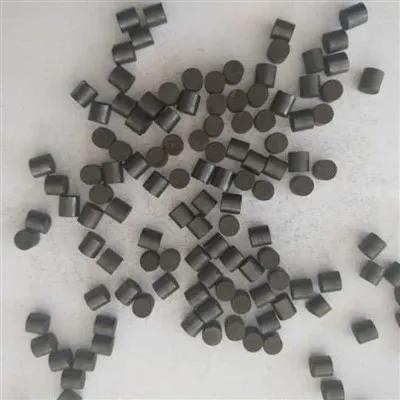
This alumina-based solid heterogeneous catalyst is engineered for the low-temperature hydrolysis of carbonyl sulfide (COS) in industrial gas and liquid streams. It converts COS into hydrogen sulfide (H₂S) and carbon dioxide (CO₂), enabling efficient downstream removal in existing desulfurization units.
Supplied in uniform spherical pellets, the catalyst is designed for fixed-bed reactors operating across low-to-moderate temperature ranges. Particle dimensions, mechanical strength, and packaging configurations can be adapted to specific reactor geometries and pressure-drop constraints.
Product Specifications
|
Parameter |
Technical Specification |
|
Catalyst Type |
Low-temperature organic sulfur hydrolysis catalyst |
|
Main Carrier |
Al₂O₃ (Alumina) |
|
Appearance |
White spherical pellets |
|
Specific Surface Area |
≥ 200 m²/g |
|
Bulk Density |
0.70 – 0.90 kg/L |
|
Average Crushing Strength |
≥ 75 N/grain |
|
Organic Sulfur Conversion |
≥ 98% (process-dependent) |
|
Operating Temperature |
0 – 150°C |
|
Operating Pressure |
Atmospheric to 13 MPa |
|
Gas-Phase Space Velocity |
1,000 – 3,000 h⁻¹ |
|
Liquid-Phase Space Velocity |
1 – 5 h⁻¹ |
|
Recommended Bed Geometry |
L/D ≥ 3 |
|
Particle Size |
Customized to reactor design |
|
Standard MOQ |
1 metric ton |
Reaction Mechanism & System Integration
COS is chemically stable and typically bypasses conventional physical adsorption beds or basic guard layers unless converted into a more reactive molecular form.
In the fixed-bed reactor, COS reacts catalytically with water vapor present in the process stream over active surface sites to yield H₂S and CO₂. Because H₂S is significantly easier to scrub or adsorb than COS, this catalytic step splits complex gas purification into a reliable two-stage sequence:
Feed Gas → Organic Sulfur Hydrolysis → H₂S Removal Unit → Purified Gas
This configuration effectively protects downstream sulfur-sensitive catalysts (such as methanation, hydrogenation, or synthesis catalysts) from irreversible poisoning.
Operating Conditions & Process Variables
Because catalytic hydrolysis performance is governed by multiple interrelated variables, successful industrial implementation relies on evaluating more than temperature alone. Key engineering inputs include:
Inlet COS Concentration: Determines required active volume and residence time.
Moisture Content: Water is an essential coreactant; feed streams must maintain adequate water vapor without causing liquid condensation within the catalyst pore structure.
Space Velocity (GHSV / LHSV): Controls contact time within the fixed bed.
Co-existing Contaminants: Heavy hydrocarbons, particulates, compressor oil, or ammonia can foul active sites or plug bed voids, necessitating upstream guard filtration.
Quality Control & Manufacturing Assurance
Production is controlled through standardized chemical synthesis and calcination protocols focused on structural integrity and active site distribution. Quality control checkpoints include:
Carrier Purity
Verification of high-purity alumina matrices.
Textural Analysis
Nitrogen adsorption testing to ensure specific surface area (≥ 200 m²/g) and pore-volume consistency.
Mechanical Testing
Automated single-pellet crushing strength measurement.
Conversion Efficiency Testing
Laboratory evaluation of organic sulfur conversion under simulated process gas streams.
Packaging, Logistics & Handling
Packaging Options: Flexible intermediate bulk containers (jumbo bags) or steel drums designed to prevent moisture ingress and mechanical attrition during transit.
Export Handling: Standard international shipping logistics managed through major maritime ports.
Loading Guidelines: The catalyst should be loaded carefully to avoid excessive mechanical impact. Pre-screening is recommended to remove any fines generated during transit.
Technical Storage and Handling Guidelines
Proper site storage is critical to maintaining physical strength and catalytic activity prior to reactor loading.
Moisture Protection: Store drums or jumbo bags in a dry, covered warehouse environment to prevent moisture condensation within the porous alumina matrix.
Stacking Limits: Adhere strictly to maximum pallet stacking limits specified on the packaging to prevent crushing of lower containers.
Dust Mitigation: Use appropriate personal protective equipment during handling to avoid breathing alumina dust or fine particulates generated during transit screening.
FAQ
Q: Can this catalyst operate effectively without external heating if the feed gas temperature fluctuates?
A: Operation depends on the actual inlet gas temperature staying within the 0 to 150°C window and maintaining sufficient water vapor. If feed temperatures drop below the active threshold or fluctuate wildly, supplemental pre-heating or stream conditioning may be required to prevent condensation or reaction rate reduction.
Q: What is the expected service life under continuous industrial operation?
A: Catalyst lifespan typically ranges from 2 to 5 years, governed directly by feed purity, absence of liquid hydrocarbon carryover, stable operating temperatures, and protection from catalyst poisons or particulate fouling.
Q: Does the catalyst require special activation or pre-reduction procedures before startup?
A: Unlike metallic hydrogenation catalysts, this oxide-based hydrolysis material generally does not require chemical reduction. Standard startup involves inert gas purging, gentle heating, and controlled introduction of process gas with proper moisture balance to prevent thermal shock.
Q: How are spent catalyst batches handled at the end of their lifecycle?
A: The alumina-based spent material is non-hazardous in terms of inert carrier structure, but adsorbed sulfur species and trace contaminants must be evaluated against local environmental regulations and plant disposal protocols prior to unloading.
Hot Tags: low temperature carbonyl sulfide hydrolysis catalyst, China low temperature carbonyl sulfide hydrolysis catalyst manufacturers, suppliers, factory