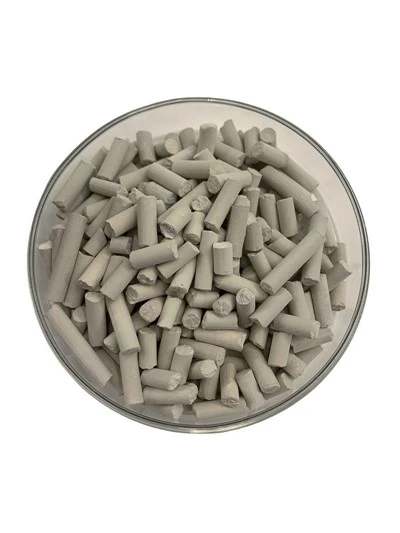
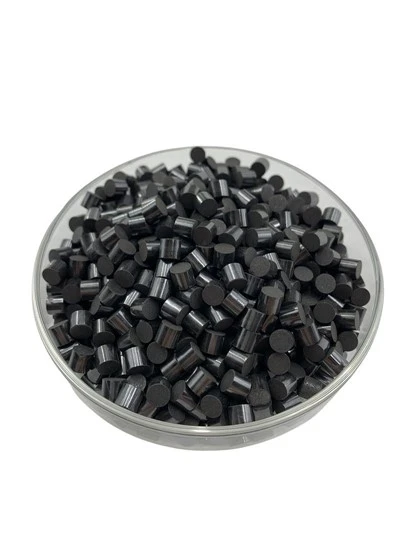
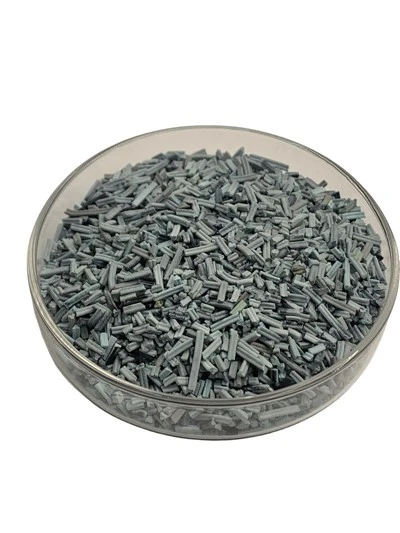
Heavy fluid catalytic cracking (FCC) feedstocks containing nickel, vanadium, iron, and other metal contaminants can accelerate catalyst deactivation and increase operating pressure on downstream units. An FCC feed demetallization catalyst is utilized in the front end of hydroprocessing systems to remove these metallic contaminants prior to entering the FCC unit.
Industrial operations rely on fixed-bed hydroprocessing where effective metal removal, pore accessibility, and metal storage capacity are critical for extending catalyst life and maintaining stable downstream performance.
Technical Specifications to Evaluate
|
Property |
Typical Evaluation Focus |
|
Catalyst Type |
Hydrodemetallization / HDM |
|
Target Contaminants |
Ni / V / Fe removal |
|
Active Metals |
Formulation matched to feed severity |
|
Support Material |
Porous refractory oxide system |
|
Surface Area & Pore Volume |
Grade-specific structural metrics |
|
Bulk Density & Particle Size |
Reactor volume and pressure-drop matching |
|
Crush Strength |
Mechanical stability for fixed beds |
|
HDM Activity & Metal Capacity |
Cycle length and conversion efficiency |
Core Function & Process Objectives
The primary function of the catalyst is the hydrodemetallization (HDM) of heavy hydrocarbon fractions, driving the targeted removal of critical metallic impurities:
Nickel (Ni) Removal: Suppresses active dehydrogenation reactions in the downstream FCC unit to control excessive hydrogen and coke formation.
Vanadium (V) Removal: Prevents structural degradation of zeolite frameworks caused by vanadium mobility under high-temperature regeneration.
Iron (Fe) Removal: Mitigates particulate accumulation and early reactor pressure-drop buildup.
Depending on formulation and operating severity, the catalyst also assists in managing heavy molecules associated with asphaltenes and Conradson carbon residue (CCR). Upstream metal removal protects the downstream catalyst inventory, controls operating costs, and stabilizes overall unit yields.
Quality Control & Packaging Standards
Consistent batch performance is critical for commercial refinery operations. Quality assurance protocols encompass chemical composition verification, active metal loading quantification, surface area and pore-size distribution testing, bulk density analysis, and crush strength evaluation.
For transport and site safety, catalysts are typically supplied in industrial-grade moisture-resistant steel drums or certified flexible intermediate bulk containers (FIBC / bulk bags) designed to preserve mechanical integrity during international transit and long-term storage.
Spent Catalyst Environmental Management & Sustainability
In compliance with environmental regulations regarding refinery catalyst change-out cycles, the following guidelines cover safe unloading, environmental compliance, and valuable metal recovery:
Unloading Safety & Pyrophoric Prevention: Thorough purging, passivation, and cooling are required prior to unloading to prevent iron sulfide components from reacting with air and causing spontaneous combustion, ensuring site safety.
Environmental Compliance & Waste Classification: Spent catalysts are classified as hazardous waste and must be hermetically sealed, stored temporarily in accordance with local environmental regulations, and transferred to certified professional hazardous waste disposal facilities.
Valuable Metal Recovery Pathways: Nickel, vanadium, and other metals enriched in the spent catalyst can be extracted and recycled through professional hydrometallurgical or pyrometallurgical processes, reducing solid waste disposal costs and aligning with circular economy standards.
Reactor Loading & Commissioning Considerations
To ensure optimal commercial performance, the catalyst requires proper on-site handling and reactor preparation:
Loading Method
Compatible with standard dense-loading or sock-loading techniques to achieve uniform void fraction and prevent localized channeling.
Pressure Drop Management
Particle size and shape are engineered to maintain stable initial bed pressure drop under high liquid hourly space velocity (LHSV).
Activation / Sulfiding
Designed for standard refinery gas-phase or liquid-phase sulfiding procedures to ensure complete metal sulfide activation before heavy feed introduction.
FAQ
Q: What is the typical turnaround time for pilot-plant testing or sample evaluation before commercial loading?
A: For refineries evaluating a new hydroprocessing catalyst grade, small-scale pilot evaluation or sample provision typically takes 2 to 4 weeks depending on the specific characterization data required. Detailed technical evaluation and feed-matching simulations are conducted prior to finalizing the catalyst volume and loading profile.
Q: How does this catalyst perform under severe high-metal or high-asphaltene feedstock shifts?
A: The pore architecture and active metal distribution are engineered to handle fluctuations in feedstock severity. When operating on heavier crudes or elevated Ni/V feeds, the catalyst maintains structural stability and high metal retention capacity, preventing premature pore blockage and mitigating pressure drop spikes across the fixed bed.
Q: Can this demetallization catalyst be integrated directly into an existing reactor loading without hardware modifications?
A: Yes. The particle dimensions, shape options (such as extrudates or spheres), and bulk density are designed to match standard commercial reactor geometries. This allows direct replacement or integration into existing graded-bed configurations without requiring modifications to reactor internals or distribution trays.
Q: What storage and shelf-life precautions are required prior to reactor loading?
A: The catalyst should be stored in its original, sealed industrial steel drums or moisture-resistant bulk containers in a dry, covered area away from direct exposure to weather. Maintaining package integrity prevents moisture absorption and preserves the mechanical crush strength and active metal stability prior to on-site loading.
Hot Tags: fcc feed demetallization catalyst, China fcc feed demetallization catalyst manufacturers, suppliers, factory, hydrorefining catalyst for desulfurizing fuel, hydrorefining catalyst for enhancing fuel properties, hydrorefining catalyst for plastic industry, hydrorefining catalyst for printing ink industry, hydrorefining catalyst for workshop use, procure hydrorefining catalyst