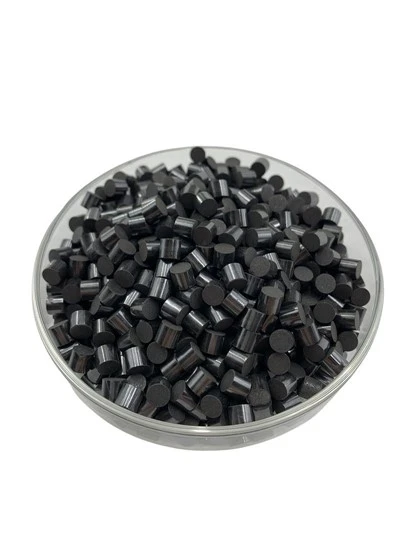
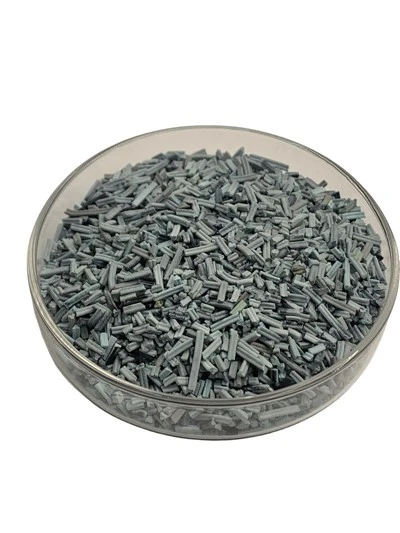
Vacuum gas oil (VGO) and heavy petroleum fractions with elevated nitrogen content can suppress the active sites of downstream fluid catalytic cracking catalysts and restrict refinery operating flexibility. A specialized hydrodenitrogenation catalyst removes organic nitrogen and sulfur compounds from heavy feeds prior to catalytic cracking.
Catalyst selection is determined based on feed composition, nitrogen level, sulfur content, reactor operating conditions, hydrogen availability, and target product specification.
Technical Parameters and Typical Properties
|
Property Category |
Parameter Name |
Typical Range / Specification |
Testing Standard / Method |
|
Chemical |
Active Metal System |
NiMo / CoMo |
ASTM / ISO |
|
MoO3 Content |
Customized to feed severity |
XRF |
|
|
NiO or CoO Content |
Customized to feed severity |
XRF |
|
|
Physical |
Shape |
Trilobe / Quadrulobe / Cylinder |
Visual |
|
Size |
1.2 mm to 1.8 mm |
ASTM D2051 |
|
|
Bulk Density |
0.65 g/cm3 to 0.85 g/cm3 |
ASTM D4164 |
|
|
Surface Area |
180 m2/g to 280 m2/g |
ASTM D3663 |
|
|
Pore Volume |
0.40 cm3/g to 0.60 cm3/g |
ASTM D4284 |
|
|
Mechanical |
Side Crush Strength |
>= 120 N/cm |
ASTM D6175 |
|
Attrition Loss |
<= 0.5 wt% |
ASTM D4058 |
|
|
Performance |
HDN Activity |
Optimized for basic nitrogen removal |
Pilot Plant Test |
Primary Applications & Target Feedstocks
This catalyst is engineered for fixed-bed hydrotreating and pretreatment units positioned upstream of fluid catalytic cracking (FCC) units. The primary function is to convert refractory organic nitrogen and sulfur compounds into forms that can be separated in downstream fractionation, thereby lowering the contaminant load entering the cracking reactor.
Typical Feedstocks Processed:
Vacuum gas oil (VGO)
Heavy gas oil (HCGO)
Coker gas oil and visbreaker gas oil
Blended heavy petroleum fractions with high nitrogen and sulfur levels
Depending on the configuration of the hydrotreater, the process also targets simultaneous hydrodesulfurization (HDS), aromatic saturation, and partial removal of trace metals such as nickel and vanadium.
Catalyst Chemistry and Formulations
Hydrorefining catalysts for heavy feed pretreatment utilize transition-metal sulfide active phases distributed across high-purity porous oxidic supports.
Common Formulations:
NiMo / Alumina: Selected when high hydrodenitrogenation and hydrogenation activity are required, particularly under medium-to-high pressure operations.
CoMo / Alumina: Applied where hydrodesulfurization is the primary operational target and sulfur removal dominates the reaction kinetics.
Modified Alumina Supports: Engineered with tailored pore size distributions to process heavy molecules with minimized diffusion resistance.
The final formulation is matched to the specific reactor pressure, hydrogen partial pressure, liquid hourly space velocity (LHSV), and target product nitrogen level.
Manufacturing and Quality Control
Consistent performance in commercial reactors relies on precise control of support synthesis, pore distribution, active metal impregnation, calcination, and forming processes.
Manufacturing Controls:
Monitored via distributed control systems (DCS) across dedicated production lines.
Laboratory physical and chemical testing including surface area analysis, mercury intrusion porosimetry, and mechanical strength measurement.
Batch-by-batch inspection parameters defined against agreed technical specifications.
Catalyst Loading and Handling Guidelines
Proper onsite handling and reactor loading directly impact commercial unit performance, pressure drop control, and catalyst life.
Loading Method: Dense loading or sock loading is recommended depending on reactor diameter and internal configurations to ensure uniform bed void fraction and prevent channeling.
Presulfiding Requirements: The catalyst requires activation/presulfiding (in-situ or ex-situ) prior to oil-in to convert metal oxides into active metal sulfide phases. Detailed guidelines are provided upon project confirmation.
Packaging, Storage, and Shelf Life
Packaging Options: Sealed steel drums or flexible intermediate bulk containers (FIBC / bulk bags) equipped with moisture-barrier linings to prevent hydration and oxidation during ocean transit.
Storage Conditions: Store in dry, well-ventilated indoor warehouses away from direct moisture, corrosive chemicals, and extreme temperature fluctuations.
Frequently Asked Questions
Q: How does the catalyst handle sudden feed quality changes, such as an unexpected increase in nitrogen or heavy metals?
A: Commercial units processing shifting crude slates frequently encounter fluctuations in VGO nitrogen and metal contents. Catalyst formulations are designed with reserve stability and optimized pore structures to accommodate transient increases in contaminant loads without immediate deactivation. However, prolonged operation outside design severity may require minor adjustments in reactor temperature or throughput to maintain target product nitrogen levels.
Q: What is the expected cycle length before regeneration or replacement is required?
A: Catalyst cycle length depends on several unit-specific variables, including initial feed contaminant levels, reactor operating pressure, catalyst volume, and severity of operation. Under standard design conditions, modern hydrotreating catalyst systems are engineered for multi-year operating cycles. Specific run-length projections are calculated during the technical evaluation phase based on client operating data.
Q: Is this catalyst supplied in the oxide form, and what are the options for presulfiding?
A: The catalyst is typically supplied in the stable metal-oxide form. It requires conversion into the active metal sulfide phase prior to hydrocarbon processing. Both in-situ sulfiding using sulfur-spiked feed or gas-phase spiking and ex-situ presulfided options can be accommodated depending on refinery turnaround schedules and unit commissioning procedures.
Q: Can this catalyst be regenerated ex-situ, and does it retain activity after regeneration?
A: Yes. When activity declines due to coke deposition and metal accumulation over a multi-year cycle, the spent catalyst can be unloaded and sent for controlled ex-situ regeneration. Regenerated catalysts typically recover a significant portion of their original surface area and hydrogenation activity, subject to the control of accumulated nickel and vanadium levels.
Hot Tags: fcc feed hydrodenitrogenation catalyst, China fcc feed hydrodenitrogenation catalyst manufacturers, suppliers, factory, hydrorefining catalyst for benzene production, hydrorefining catalyst for olefinic fuels, hydrorefining catalyst for purifying petroleum products, hydrorefining catalyst for pvc production, hydrorefining catalyst for removing contaminants from fuel, hydrorefining catalyst for toluene production