


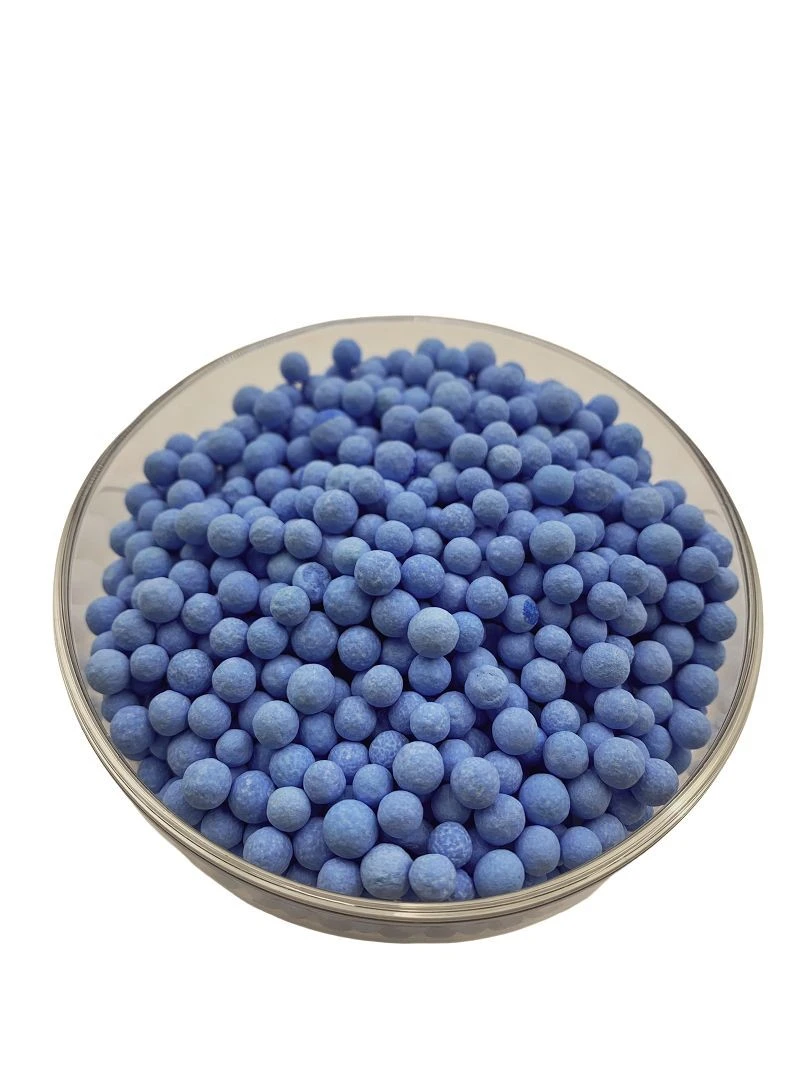
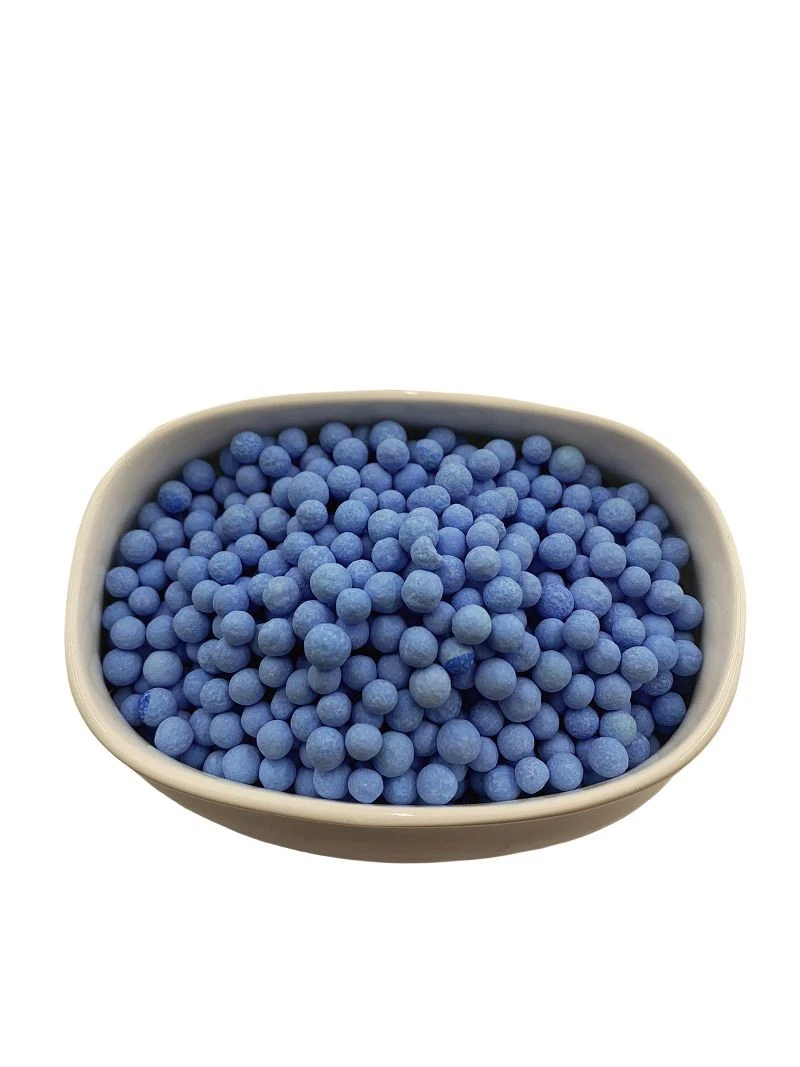


A999G Low-Temperature Tail Gas Co-Mo Hydrogenation Catalyst is an improved hydrodesulfurization catalyst built on a gamma alumina carrier, using cobalt and molybdenum as active ingredients. It features low bulk density, strong sulfur loading capacity and a large specific surface area. It works well for hydrotreating hydrocarbon gases to make ammonia synthesis gas, hydrogen and methanol synthesis gas, and can also handle light naphtha desulfurization and refinery reformer feed pretreatment.
Developed specifically for tail gas sulfur recovery, A999G adopts modified activated alumina as its carrier. The catalyst delivers evenly spread active sites and well-adjusted pore structure while maintaining low bulk density. When matched against similar domestic catalysts, its lighter bulk density reduces required catalyst loading by one-third on the same unit, which helps customers cut overall investment expenses significantly.
Each plastic film-lined cardboard drum holds 40 kg of A999G catalyst. Store the product in dry conditions and separate it from other chemical materials. Take gentle care during loading, unloading and transport to avoid particle breakage. If sealed properly in storage, the catalyst will keep full performance for 3~5 years.
Product Parameters
Main technical indexes of A999G Low temperature Co-Mo hydrogenation catalyst
|
Industry-specific attributes |
|
|
Other attributes |
|
|
Place of Origin |
China |
|
Classification |
Catalyst |
|
Other Name |
Low temperature Co-Mo hydrogenation catalyst |
|
Application |
Low temperature hydrogenative desulfurization |
|
Brand Name |
XUNDA |
|
Model Number |
A999G |
|
Main technical indexes |
|
|
Main raw material |
Co-Mo Al2O3 |
|
Appearance |
Blue granule or extrudate |
|
Purity |
High purity |
|
Size, mm |
Customized |
|
Specific surface area, m2/g |
≥200 |
|
Bulk density, kg/L |
0.60-0.90 |
|
Average crushing strength, N/grain |
≥120 |
|
Pore volume, ml/g |
≥0.40 |
|
Abrasion ratio, %(m/m) |
≤1.0 |
|
Supply Ability |
|
|
Manufacturer |
Yes |
|
Certification |
ISO9001:2015 |
|
Supply Ability |
9600 Ton/Tons per Year |
|
Packaging and delivery |
|
|
Packaging Details |
Jumbo bag or steel drum package or cardboard bucket |
|
Port |
Shanghai, Ningbo, Shenzhen, Qingdao |
|
Selling Units |
Single item |
|
MOQ |
1ton |
|
Lead Time |
|
|
Quantity (kilograms) |
>1000 |
|
Lead time (days) |
To be negotiated |
Product Advantages
1.Superior catalytic activity from optimized CoO-MoO₃ active system
2.Low operating temperature; suitable for direct use with high-olefin feedstock in adiabatic reactors
3.High mechanical strength with minimal pulverization, excellent tolerance for high pressure and high space velocity
4.Balanced outstanding activity, thermal stability and structural strength
5.Large specific surface area, evenly dispersed active components, stable performance and high conversion efficiency
Application
A999G Low-temperature Tail Gas Co-Mo Hydrogenation Catalyst is engineered for precision fine desulfurization. It effectively removes organic sulfur from various hydrocarbons and process gases, widely applicable to fertilizer plants, methanol plants, refinery hydrogen production units and ammonia desulfurization systems that take natural gas, oilfield gas, refinery gas and light oil as raw materials.
equipment, production, quality
The key in production process


As a manufacture, the equipment of production naturally become an important aspect, it is the key in product quality and efficiency, professional and advanced equipment can ensure the quality and efficiency of production. In daily production, it is necessary to pay attention on the operating situation of equipment, ensure that the equipment is normal operating because it is also a part of production cost. Owning the equipment, it is equivalent to have the basic of production, therefore, achieving the higher efficiency and quality.
FAQ
Q: What are the key differences between low-temperature sulfur-containing tail gas hydrogenation conversion catalysts and conventional sulfur-containing tail gas hydrogenation conversion catalysts?
A: It is optimized and developed for low-temperature environments and maintains good catalytic activity under low-temperature working conditions.
Q: Which type of exhaust gas treatment facility is more suitable for using low-temperature hydrogenation conversion catalysts for sulfur-containing flue gases?
A: It adapts to tail gas systems with low overall operating temperature and makes up for the shortcomings of conventional catalysts in low-temperature environments.
Q: How well does the A999G low-temperature sulfur tail gas hydrogenation catalyst tolerate variations in gas flow rate and temperature?
A: It can tolerate slight fluctuations of gas flow and temperature with stable operation and strong fault tolerance.
Q: What material is used as the support for the A999G low-temperature sulfur tail gas hydrogenation conversion catalyst, and how stable is it?
A: Adopting alumina as the carrier with composite active components, it has stable chemical properties and is not easy to deactivate after long-term use.
Q: Is the loading method of the A999G low-temperature sulfur tail gas hydrogenation conversion catalyst the same as that of conventional sulfur tail gas hydrogenation conversion catalysts?
A: The loading specifications are applicable to conventional hydrogenation conversion catalysts for sulfur-containing tail gas, requiring no special reactor modifications and enabling easy replacement.
Product production process

Hot Tags: Low temperature Co-Mo hydrogenation catalyst, China Low temperature Co-Mo hydrogenation catalyst manufacturers, suppliers, factory, sulfur recovery rate increase catalysts, sulfur recovery environmental protection measurement, certified sulfur recovery catalysts, optimal sulfur recovery catalysts, sulfur recovery characteristic, sulfur recovery unit catalysts


