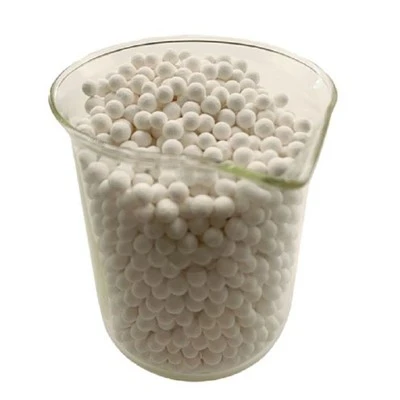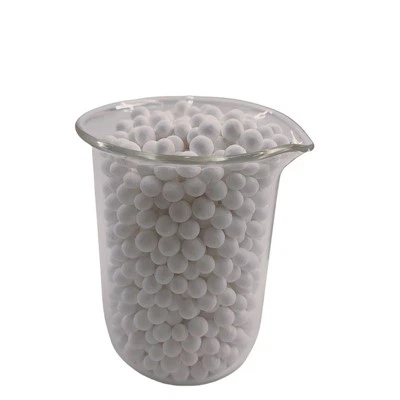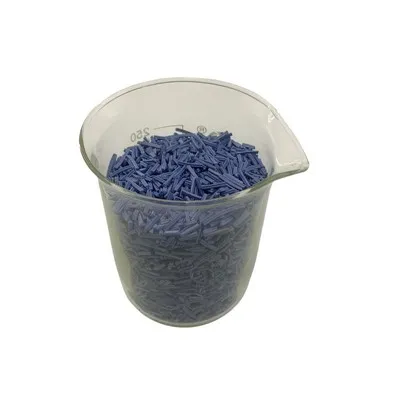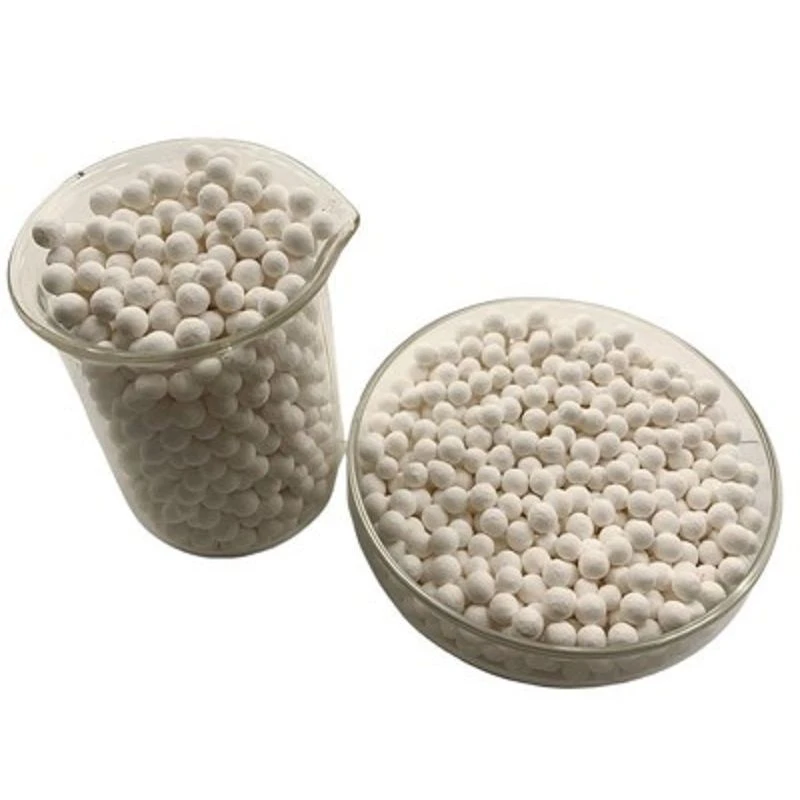
This alumina-based heterogeneous catalyst is formulated for the selective catalytic hydrolysis of carbonyl sulfide (COS) and other organic sulfur compounds into hydrogen sulfide (H2S) and carbon dioxide (CO2) under low-temperature operating conditions. Designed for fixed-bed industrial reactors, this material enables sulfur conversion at temperatures ranging from 0C to 150C, bridging the gap between raw gas purification and downstream sweetening units such as zinc oxide beds.
Key Technical Specifications
|
Parameter |
Specification |
Test / Measurement Standard |
|
Catalyst Type |
Organic sulfur hydrolysis catalyst |
Fixed-bed gas-phase reaction |
|
Primary Support Material |
Al2O3 (Aluminium Oxide) |
X-ray fluorescence (XRF) |
|
Physical Form |
White spherical particles |
Visual inspection |
|
Specific Surface Area |
>= 200 m2/g |
BET nitrogen adsorption |
|
Bulk Density |
0.70 - 0.90 kg/L |
Standard poured bulk density |
|
Average Crushing Strength |
>= 75 N/grain |
Single-pellet crush tester |
|
Organic Sulfur Conversion |
>= 98% (Initial baseline) |
Gas chromatography (GC-FPD/TCD) |
|
Operating Temperature |
0 - 150 C |
Process reactor thermocouple |
|
Operating Pressure |
Atmospheric to 13 MPa |
Hydrostatic rating |
|
Gas-Phase Space Velocity (GHSV) |
1,000 - 3,000 h-1 |
Volumetric flow rate / bed volume |
|
Liquid Space Velocity (LHSV) |
1 - 5 h-1 |
Applicable for mixed-phase streams |
|
Bed Geometry Ratio |
L/D >= 3 |
Recommended reactor aspect ratio |
|
Particle Size |
Customized to reactor design |
Sieve analysis |
Industrial Application Environments
This catalyst is utilized across gas processing facilities where sulfur compounds must be reduced to parts-per-million (ppm) or sub-ppm levels.
Natural Gas Processing
Removal of trace COS from wellhead or pipeline gas before cryogenic fractionation or acid gas removal units.
Syngas Purification
Treatment of synthesis gas derived from coal, biomass, or natural gas reforming prior to downstream catalytic synthesis.
Petroleum Gas Treatment
Processing refinery fuel gas and liquefied petroleum gas (LPG) streams containing refractory organic sulfur.
Industrial Gas Desulfurization
Purifying hydrogen, carbon dioxide, and nitrogen feedstocks for chemical manufacturing.
Reaction Mechanism and Process Integration
Carbonyl sulfide resists direct removal by standard physical solvents or basic washes in many industrial gas streams. This catalyst facilitates a heterogeneous catalytic reaction on its active alumina surface:
COS + H2O -> H2S + CO2
This reaction converts organic sulfur into hydrogen sulfide, which is substantially easier to scrub using conventional metal oxide polishers.
Typical Two-Stage Purification Train
Raw Gas (with COS) -> Hydrolysis Reactor -> H2S Intermediate -> Downstream ZnO Polishing Unit
This configuration prevents the premature fouling of sulfur-sensitive downstream catalysts (such as hydrogenation or methanation catalysts) while avoiding the high energy expenditure associated with thermal high-temperature hydrolysis systems.
Operating Window and Process Parameters
Operating performance depends on maintaining proper equilibrium between gas velocity, moisture, and temperature.
Low-Temperature Capability: Operates efficiently between 0C and 150C, reducing utility costs by eliminating external feed-gas preheating in ambient-temperature climates or low-enthalpy streams.
Moisture Requirements: Hydrolysis requires stoichiometric water vapor (H2O to COS ratio greater than 1 to 1). Dry feed gas streams require pre-humidification to maintain catalytic activity.
Pressure Tolerance: Certified for high-pressure service up to 13 MPa, ensuring compatibility with high-pressure natural gas transmission lines and synthesis loops.
Catalyst Deactivation and Prevention Measures
Moisture Starvation: Insufficient water vapor halts the catalytic conversion cycle. Maintaining continuous relative humidity prevents sudden drops in conversion efficiency.
Contaminant Poisoning: Heavy hydrocarbons, free liquid water droplets, chlorine, and ammonia compounds can block active surface sites. Inlet guard beds or knockout drums are recommended for contaminated streams.
Sulfate and Sulfur Deposition: Long-term accumulation of strongly adsorbed secondary sulfur species can gradually occupy micropores, manageable through periodic thermal regeneration or scheduled replacement cycles.
Supply Chain, Packaging, and Quality Assurance
Manufacturing Capacity: Bulk industrial output backed by dedicated catalyst synthesis infrastructure.
Standard Packaging: Steel drums with inner protective liners or heavy-duty industrial jumbo bags designed to prevent moisture ingress during overseas transit.
Quality Control Protocols: Every production batch undergoes independent laboratory verification for surface area (BET), bulk density, single-pellet crushing strength, and chemical composition prior to dispatch.
Global Shipping: Export logistics managed via major container ports with complete material test reports and certificates of analysis provided per shipment.
FAQ
Q: How does this catalyst perform in gas streams containing high concentrations of carbon dioxide or hydrogen sulfide?
A: The alumina-based matrix is chemically stable in high-pressure streams containing elevated levels of CO2 and moderate H2S. However, a preliminary assessment of gas dew points and acid gas ratios is required to prevent liquid water condensation or localized pore blockage within the fixed bed.
Q: Is thermal regeneration possible once the catalyst shows signs of activity decline?
A: Yes. If deactivation is primarily caused by reversible secondary sulfur deposition or light hydrocarbon accumulation, the bed can be regenerated in-situ using a controlled inert gas or heated sweet gas purge containing stoichiometric water vapor at elevated temperatures, subject to specific engineering guidelines.
Q: What is the recommended loading procedure for industrial-scale fixed-bed reactors?
A: The catalyst should be dense-loaded or sock-loaded using specialized loading chutes to minimize pellet breakage and dusting. A support layer of inert ceramic balls (typically graded sizes from 10mm to 25mm) must be placed at the bottom and top of the reactor to distribute gas flow uniformly and prevent catalyst migration.
Q: How does moisture variation in the feed gas affect long-term conversion efficiency?
A: The hydrolysis reaction relies strictly on adequate water vapor present in the gas stream. Fluctuations below the stoichiometric threshold will rapidly reduce COS conversion rates. If feed gas moisture is intermittent, a continuous water injection or humidification slipstream must be installed upstream of the catalytic reactor.
Hot Tags: ambient temperature cos hydrolysis catalyst, China ambient temperature cos hydrolysis catalyst manufacturers, suppliers, factory