

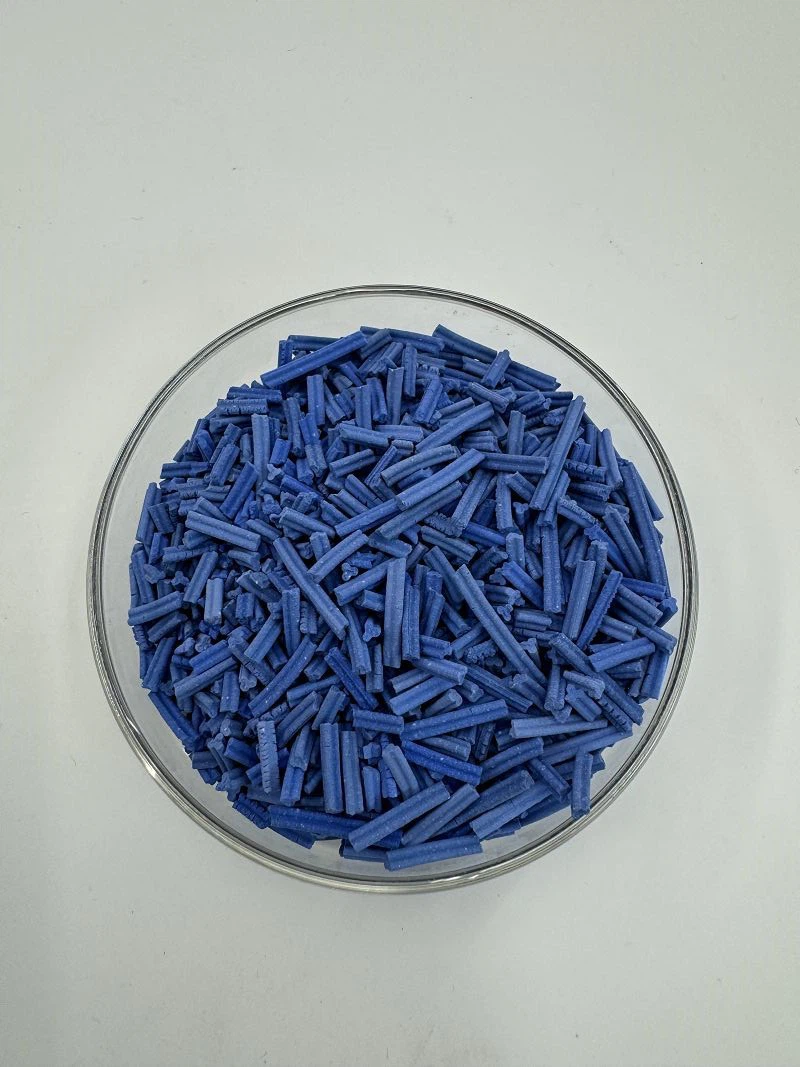
Resid Hydrodesulfurization (Resid HDS) Catalyst is engineered for refinery hydrotreating units to reduce sulfur in heavy residual feeds under hydrogen-rich conditions. The catalyst promotes the conversion of organosulfur compounds into hydrogen sulfide while tolerating severe feed impurities such as high metals, asphaltenes, and Conradson carbon residue (CCR).
Proper selection depends on comprehensive feed characteristics, contaminant loads, reactor configurations, and target product specifications. We supply supported transition-metal catalyst platforms-including Co-Mo and Ni-Mo formulations-customized to specific refinery processing objectives.
Product Specifications
|
Parameter |
Specification / Technical Details |
|
Product Category |
Resid Hydrodesulfurization Catalyst |
|
Process Application |
Residue Hydrotreating / Hydrodesulfurization |
|
Typical Feedstock |
Atmospheric residue, vacuum residue, high-sulfur heavy streams |
|
Primary Function |
Deep Hydrodesulfurization (HDS) |
|
Secondary Function |
Hydrodemetallization (HDM) & contaminant load reduction |
|
Active Metal Systems |
Co-Mo or Ni-Mo based formulations (grade-dependent) |
|
Support Material |
Modified alumina-based carrier |
|
Particle Geometry |
Extrudate or specified industrial shape |
Product Applications
Fixed-Bed Resid Hydrotreating Units (RCD / HYVAIR): Utilized in multi-bed reactor systems to process high-sulfur atmospheric and vacuum residues ahead of downstream conversion units.
Feedstock Pre-treating for Resid Fluid Catalytic Cracking (RFCC): Reduces sulfur, metals, and Conradson carbon residue to prevent catalyst poisoning and improve liquid yields in downstream FCC units.
Low-Sulfur Fuel Oil (LSFO) Production: Enables refineries to upgrade heavy fuel oil blending components to meet stringent international marine fuel sulfur regulations.
Heavy Crude Upgrading: Applied in grass-roots or revamped units designed to upgrade extra-heavy oils and bitumen into sweeter, lighter synthetic crudes.
Product Features & Benefits
High Metals Capacity
Optimized pore architecture provides exceptional pore volume for vanadium and nickel deposition, extending the operating cycle before pressure drop builds up.
Superior Asphaltene Conversion
Advanced pore-size distribution facilitates internal diffusion of bulky asphaltene molecules, preventing pore mouth plugging and premature deactivation.
High Mechanical Strength
Exceptional crush strength and low attrition rates minimize fines generation, reducing pressure drop accumulation in long fixed-bed reactors.
Tailored Selectivity
Balanced hydrogenation and hydrodesulfurization functions minimize excessive hydrogen consumption while achieving deep desulfurization targets.
Manufacturing & Quality Control
Catalyst consistency relies on rigorous control across support synthesis, active-metal impregnation, and thermal processing. Our production infrastructure incorporates:
DCS Process Control: Real-time monitoring and historical logging of critical manufacturing variables.
Physical & Chemical Characterization: Precision evaluation of specific surface area, pore volume distribution, bulk density, and mechanical strength.
Catalytic Evaluation: Laboratory-scale testing units to verify activity parameters prior to commercial batch release.
Key QC Inspection Items:
- Active-metal composition and loading
- Specific surface area and pore volume distribution
- Radial crush strength and attrition resistance
- Particle dimensions and bulk density
- Batch-to-batch structural consistency
Packaging, Storage & Handling
To preserve catalytic activity and mechanical integrity during international transit, strict packaging standards are maintained:
Moisture Protection
Sealed in moisture-barrier industrial packaging to prevent hydration or degradation of active phases.
Packaging Options
Available in heavy-duty steel drums or flexible intermediate bulk containers (FIBC / ton bags) as specified.
Traceability
Each batch is marked with clear labeling indicating grade, net weight, batch number, and production date.
Storage Guidelines
Store in dry, ventilated indoor conditions away from direct moisture and corrosive atmospheres.
Frequently Asked Questions
Q: What is the difference between Resid HDS and conventional HDS catalyst?
A: Resid HDS service requires greater focus on pore accessibility, metals tolerance, asphaltenes, and mechanical strength due to larger molecular sizes and higher contaminant levels in heavy feeds.
Q: Is Co-Mo or Ni-Mo better for Resid HDS?
A: Active-metal selection depends entirely on feed composition, nitrogen content, hydrogen partial pressure, and target sulfur conversion. Evaluation is performed on a case-by-case basis.
Q: Can particle size and physical properties be adjusted?
A: Catalyst geometry, pore structure, and physical specifications can be evaluated against specific reactor constraints and hydrodynamic requirements.
Q: How to initiate a technical evaluation or sample request?
A: Submit your feed analysis and operating conditions to our technical team for preliminary review and grade recommendation prior to trial order or commercial RFQ.
Hot Tags: resid hydrodesulfurization catalyst, China resid hydrodesulfurization catalyst manufacturers, suppliers, factory, hydrorefining catalyst for domestic industries, hydrorefining catalyst for fischer tropsch fuels, hydrorefining catalyst for reformulated gasoline production, hydrorefining catalyst for regional industries, hydrorefining catalyst for water treatment industry, hydrorefining catalyst for workshop use


