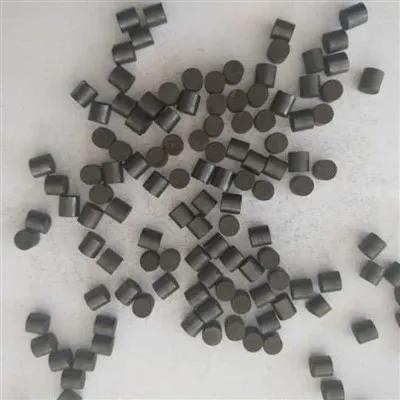
This cobalt-molybdenum on alumina hydrorefining catalyst is formulated for hydrodesulfurization (HDS) and hydronitrogen removal (HDN) in industrial hydroprocessing units. It is engineered for feedstocks including vacuum gas oil (VGO), diesel, and wax oil, addressing high-sulfur and heavier hydrocarbon streams.
The active metal system consists of molybdenum trioxide and cobalt oxide (MoO3-CoO) supported on a modified alumina carrier. During operation, the active metals form sulfided phases that deliver catalytic sites for hydrogenation and sulfur cleavage. The clover-shaped extrudate balances particle size, pore volume, specific surface area, and mechanical strength for fixed-bed reactor operations.
For VGO applications, catalyst selection requires matching the formulation against feed sulfur, feed nitrogen, density, aromaticity, metals, boiling range, reactor pressure, hydrogen availability, and target product specifications.
Product at a Glance
|
Parameter |
Specification / Data |
|
Catalyst Type |
Co-Mo on alumina hydrotreating catalyst |
|
Primary Application |
VGO hydrodesulfurization |
|
Secondary Function |
Hydrotreating and HDN |
|
Active Components |
MoO3-CoO |
|
Support |
Modified Al2O3 |
|
Shape |
Clover strip |
|
Particle Size |
1.5 to 2.5 mm |
|
Bulk Density |
0.75 to 0.85 kg/L |
|
Specific Surface Area |
>= 200 m2/g |
|
Pore Volume |
>= 0.40 mL/g |
|
Average Side Crush Strength |
>= 150 N |
|
Reference Temperature |
230 to 280 C |
|
Reference Hydrogen Pressure |
1.6 MPa |
|
Reference H2/Oil Ratio |
80 |
|
Reference LHSV |
8.0 h-1 |
Typical VGO Applications
This catalyst is applied in refinery hydroprocessing units where heavy petroleum fractions require hydrogen treatment prior to downstream processing.
VGO Hydrotreating
VGO hydrodesulfurization reduces sulfur-containing molecules before the treated stream enters conversion units. Core operational objectives include:
- Lowering sulfur concentrations in heavy distillates.
- Reducing nitrogen compounds to protect downstream noble-metal catalysts.
- Improving feed hydrogen-to-carbon ratios for downstream conversion steps.
- Preparing heavy refinery streams for subsequent processing units.
High-Sulfur Feedstocks
The Co-Mo catalyst platform operates in high-sulfur and high-nitrogen processing environments. Final operational suitability is verified through a comprehensive assay of the representative feed before commercial deployment.
Other Hydrorefining Feeds
The catalyst formulation is also specified for diesel and wax oil hydrorefining, allowing operators to standardize catalyst management across multiple hydroprocessing services.
Catalyst Loading & Handling Guidelines
For fixed-bed hydroprocessing units, proper handling during turnaround and loading protects catalyst performance:
Loading Technique
Dense loading or sock loading methods are recommended to ensure uniform void fraction and prevent channeling.
Attrition Control
High mechanical crush strength (>= 150 N) limits fines generation during dense loading operations.
Dust Mitigation
Extrudates are screened prior to packaging to minimize fine particulates and protect initial reactor bed pressure drop.
Manufacturing, Quality Control & Traceability
Catalyst production utilizes DCS-controlled manufacturing lines designed for large-scale industrial supply. Quality assurance protocols include:
Batch Testing
Verification of physical properties, specific surface area, pore volume, and side crush strength for every production lot.
Structural Analysis
Nitrogen adsorption methods utilized for pore size distribution and surface area verification..
Activity Verification
Laboratory-scale evaluation of hydrodesulfurization activity.
Quality Standard
Operations governed strictly by ISO 9001:2015 certification.
Packaging, Supply, and Delivery
|
Minimum Order Quantity (MOQ) |
1 metric ton |
|
Packaging Options |
Jumbo bags or steel drums configured for moisture protection and safe handling |
|
Export Logistics |
Handled via major ports including Shanghai, Ningbo, Shenzhen, and Qingdao |
|
Sample Availability |
Laboratory evaluation samples provided upon request |
|
Supply Capacity |
Approximately 9,500 to 9,600 tonnes per year across the catalyst manufacturing lines |
Catalyst Storage, Handling, and Regeneration Guidelines
Storage and Moisture Protection
To prevent physical degradation or premature hydration of the active support, unopened packaging (jumbo bags or steel drums) must be stored in dry, covered indoor conditions away from direct weathering and ground moisture.
Spent Catalyst Disposal and Environmental Compliance
Spent material unloaded during plant turnarounds contains heavy metal sulfides and hydrocarbons. Handling, extraction, and disposal must comply with local and international environmental regulations governing hazardous industrial refinery waste.
FAQ
Q: What is the typical turnaround or regeneration cycle for this catalyst?
A: The operating cycle length depends heavily on feedstock severity, reactor operating temperatures, hydrogen partial pressure, and contaminant loading such as nickel and vanadium. Under standard commercial VGO hydrotreating conditions, fixed-bed run lengths are evaluated based on end-of-run temperature limits and product sulfur breakthrough. Off-site or in-situ regeneration feasibility can be reviewed upon request based on the specific operating history.
Q: How are fresh catalyst batches activated during initial reactor startup?
A: Commercial startup requires a controlled sulfiding procedure using sulfur-spiked feeds or direct gas-phase/liquid-phase presulfiding agents (such as dimethyl disulfide) to convert the metal oxides into active sulfided phases. Detailed sulfiding guidelines, temperature ramping schedules, and hydrogen flow parameters are provided upon commercial contract finalization to ensure proper activation of the active metal sites.
Q: Can this catalyst be co-loaded with other hydroprocessing catalysts in the same reactor?
A: Yes. In multi-bed or graded reactor configurations, this catalyst is frequently combined with demetallization (HDM) catalysts at the reactor inlet to trap trace metals and guard beds before the primary hydrodesulfurization zone. System configurations depend entirely on the feed's metal content and reactor bed volume distribution.
Hot Tags: vgo hydrodesulfurization catalyst, China vgo hydrodesulfurization catalyst manufacturers, suppliers, factory, hydrorefining catalyst for aviation fuels, hydrorefining catalyst for global industries, hydrorefining catalyst for lubricating oils, hydrorefining catalyst for plastic production, hydrorefining catalyst for polystyrene production, hydrorefining catalyst for purifying petroleum products