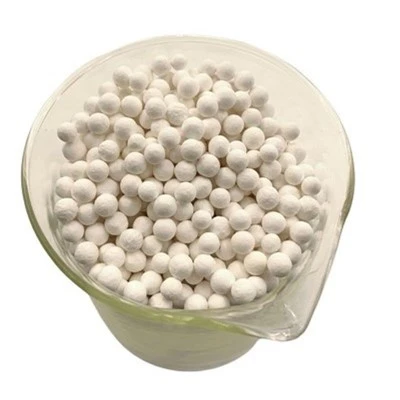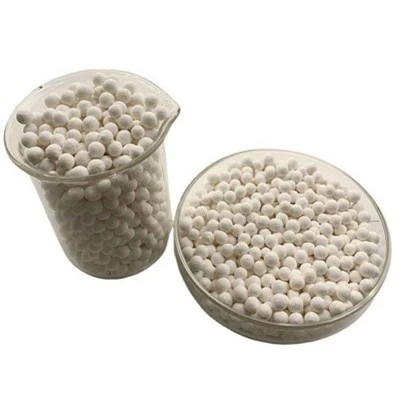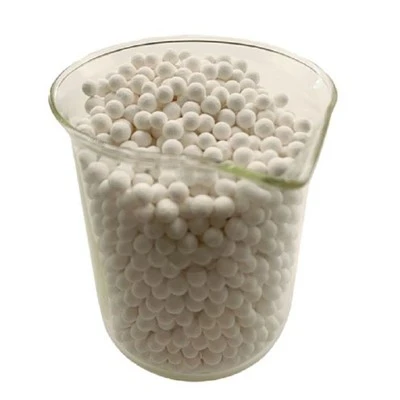
Our Natural Gas COS Hydrolysis Catalyst (Model A911) is an active alumina-based fixed-bed catalyst engineered for the catalytic conversion of carbonyl sulfide (COS) into hydrogen sulfide (H2S) and carbon dioxide (CO2) in natural gas purification and sulfur removal systems.
The core chemical reaction governed by the catalyst is:
COS + H2O -> H2S + CO2
Direct removal of trace COS from natural gas streams is challenging for conventional physical and chemical absorption units. By converting COS into H2S through a catalytic hydrolysis reactor, sulfur compounds become readily treatable by downstream desulfurization units such as amine sweetening or metal oxide scavenger beds.
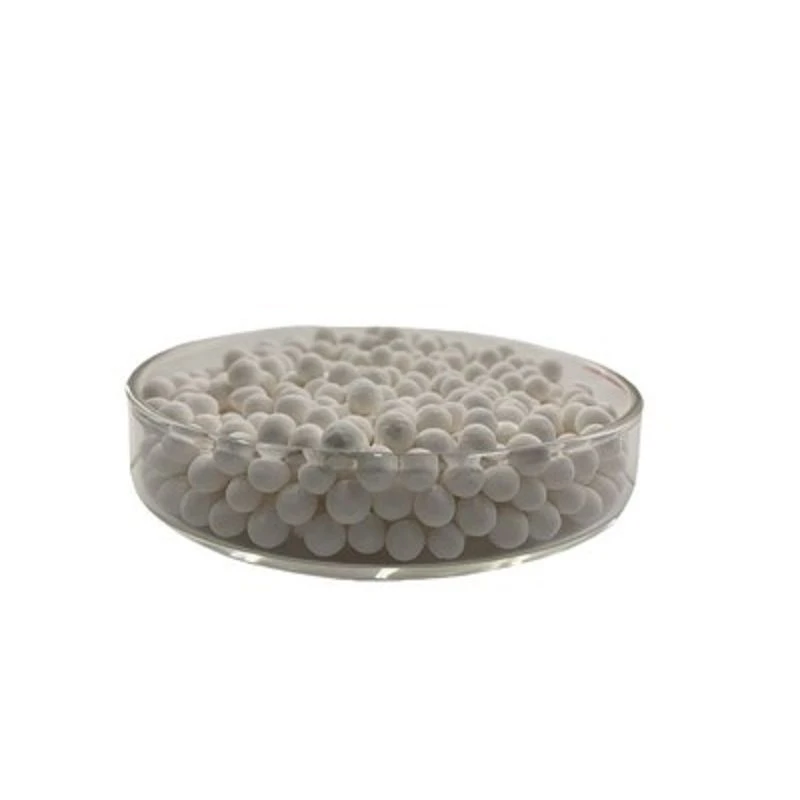
The product utilizes high-purity active alumina (Al2O3) as the primary carrier material and is manufactured in white spherical particles, with custom sizing available to match specific fixed-bed reactor designs.
Technical Specifications & Physical Properties
|
Parameter |
Specification |
|
Product Grade |
COS Hydrolysis Catalyst (Model A911) |
|
Primary Material |
Active Alumina (Al2O3) |
|
Particle Form |
White Sphere |
|
Specific Surface Area |
>= 200 m2/g |
|
Bulk Density |
0.70 - 0.90 kg/L |
|
Crushing Strength |
>= 75 N/grain |
|
Organic Sulfur Conversion |
>= 98% (Under standard test conditions) |
|
Operating Temperature |
0 - 150 deg C |
|
Operating Pressure |
Atmospheric to 13 MPa |
|
Gas Hourly Space Velocity (GHSV) |
1,000 - 3,000 h-1 |
|
Particle Size |
Customized per reactor specification |
|
Recommended Bed Geometry |
Bed Height-to-Diameter Ratio (L/D) >= 3 |
Industrial Application Scenarios
The catalyst is deployed across gas processing facilities where organic sulfur reduction is required to meet pipeline specifications or protect downstream equipment:
Natural gas production and field conditioning
Sour gas treatment plants
Petrochemical feedstock purification
Industrial fuel gas desulfurization
Protection of downstream sulfur-sensitive precious metal catalysts
Operating Principle & Reaction Mechanism
Carbonyl sulfide is a persistent organic sulfur compound frequently found in natural gas, associated petroleum gas, and refinery fuel gases. Downstream catalysts and synthesis units are often extremely sensitive to sulfur poisons, making deep sulfur removal mandatory.
Catalytic Activation: The feed gas containing trace COS and adequate moisture (H2O) passes through the fixed-bed catalytic reactor.
Hydrolysis Reaction: Over the high-surface-area Al2O3 active sites, COS reacts with water vapor to form hydrogen sulfide and carbon dioxide.
Downstream Polishing: The generated H2S is routed to subsequent sweetening units for complete removal.
Catalyst Handling, Loading, and Operation Guidelines
Proper handling and commissioning ensure optimal performance and prevent excessive pressure drops in fixed-bed reactors:
Contaminant Control: Upstream filtration or guard beds are recommended if the feed gas contains dust, scale, heavy oils, or liquid droplets that could blind active surface sites.
Loading Procedure: Spherical catalysts should be loaded uniformly into the reactor to prevent channeling and local gas bypassing, maintaining an aspect ratio of L/D >= 3.
Start-Up Monitoring: Monitor inlet/outlet temperatures, differential pressure (delta P), and COS conversion efficiency continuously during initial commissioning to ensure stable hydrothermal operation.
Manufacturing Quality & Testing Infrastructure
Industrial catalyst reliability requires strict batch-to-batch consistency in physical strength, pore distribution, and catalytic activity.
Production Capacity: Manufacturing operations utilize multiple dedicated catalyst production lines supported by distributed control systems (DCS) to monitor calcination, impregnation, and forming parameters.
Laboratory Evaluation: Pilot-scale sulfur recovery and hydrolysis evaluation systems simulate industrial gas compositions and pressure conditions to verify catalytic conversion efficiency.
Quality Verification: Analytical instruments measure specific surface area, pore-size distribution, bulk density, and single-grain crushing strength for every production lot to prevent bed channeling and excessive pressure drop.
Catalyst Packaging and Supply Logistics
Standard Packaging
Flexible intermediate bulk containers (jumbo bags) or sealed steel drums designed to protect active alumina from atmospheric moisture during transit.
Customization
Particle size grading can be tailored to specific reactor tube diameters or radial flow basket designs.
Minimum Order Quantity
Available for industrial trial batches and full commercial plant replacements.
FAQ
Q: What is the typical service life of the COS hydrolysis catalyst under normal operating conditions?
A: The operational lifespan depends heavily on feed gas cleanliness, moisture stability, and temperature control. When protected from liquid water condensation, heavy hydrocarbons, and particulate dust, the catalyst typically delivers stable performance for multiple years. Periodic monitoring of pressure drop and organic sulfur conversion helps determine actual replacement timing.
Q: Does the catalyst require special activation or pre-treatment before startup?
A: No complex chemical reduction or complex activation procedure is required. The catalyst is shipped in its active oxide form. However, proper dry-down and initial nitrogen purging followed by gradual temperature and feed introduction are recommended to prevent thermal shock and liquid water accumulation inside the fixed bed.
Q: How does the catalyst handle unexpected temperature fluctuations or minor process upsets?
A: The active alumina carrier provides robust thermal stability within the normal operating range of 0 to 150 degrees Celsius. Minor, short-term temperature drops typically cause a temporary reduction in conversion efficiency rather than permanent damage, provided no liquid water condenses on the active sites.
Q: Can this catalyst be regenerated once its activity declines due to minor contamination?
A: Because sulfur removal occurs via catalytic hydrolysis rather than permanent adsorption, loss of activity is usually caused by physical blockage, sulfate deposition, or pore blinding from heavy oils and dust rather than sulfur saturation. In most industrial applications, replacement is more economical than on-site regeneration once physical or chemical degradation occurs.
Hot Tags: natural gas cos hydrolysis catalyst, China natural gas cos hydrolysis catalyst manufacturers, suppliers, factory