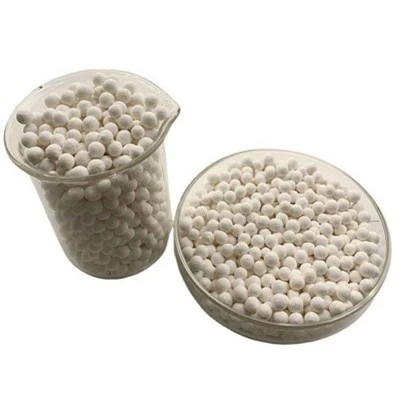
The Syngas COS Hydrolysis Catalyst is a specialized fixed-bed granular catalyst engineered to convert refractory carbonyl sulfide (COS) into hydrogen sulfide (H2S) and carbon dioxide (CO2) in synthesis gas, hydrogen streams, and petrochemical feedstocks.
Because carbonyl sulfide is chemically stable and cannot be directly captured by standard physical scrubbers, this catalytic hydrolysis step transforms organic sulfur into an easily removable form (H2S) upstream of polishing units (such as zinc oxide or iron oxide desulfurizers).
Technical Specifications & Physical Properties
|
Parameter |
Specification (A911) |
|
Catalyst Type |
Organosulfur / COS Hydrolysis Catalyst |
|
Primary Matrix |
Activated Alumina (Al2O3) with active promoters |
|
Physical Form |
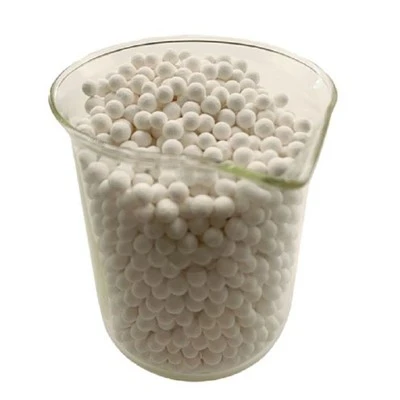
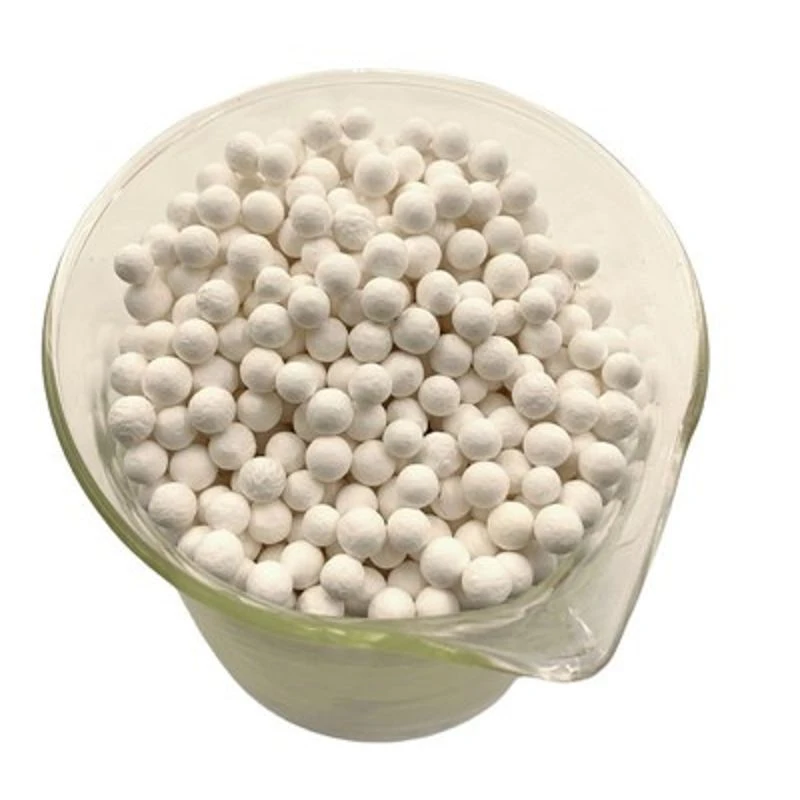
White spherical pellets |
|
Particle Size |
Customized per reactor design requirements |
|
Specific Surface Area |
>= 200 m2/g |
|
Bulk Density |
0.70 - 0.90 kg/L |
|
Crushing Strength |
>= 75 N/grain |
|
Organic Sulfur Conversion |
>= 98% |
|
Operating Temperature |
0 - 150 deg C |
|
Operating Pressure |
Atmospheric to 13 MPa |
|
Gas-Phase Space Velocity (GHSV) |
1,000 - 3,000 h-1 |
Mechanical & Structural Integrity Notes
Crushing Strength (>= 75 N/grain): Prevents particle breakdown, dusting, and excessive pressure drop accumulation under high-pressure drop conditions and deep bed loading.
Porosity (>= 200 m2/g): Maximizes active site exposure for fast chemical kinetics.
Bulk Density (0.70 - 0.90 kg/L): Ensures predictable void fractions and uniform gas distribution across large-diameter industrial reactors without severe channeling.
Process Integration & Position in Purification Train
In an industrial gas processing train, catalytic hydrolysis serves as a chemical conversion barrier rather than a terminal absorption stage. A standard configuration follows this sequence:
Raw Syngas Feed -> COS Hydrolysis Reactor (A911) -> H2S Polishing Unit (e.g., ZnO / Activated Carbon) -> Purified Feedstock
Moisture Dependency: The reaction stoichiometry requires adequate water vapor in the feed gas. Minimum humidity thresholds must be verified during engineering sizing.
Upstream Guarding: Protects downstream reforming, methanation, and chemical synthesis loops from trace sulfur slippage.
Deactivation Prevention & Operating Guidelines
Liquid Water Condensation
The catalyst must operate above the dew point. Liquid water droplets can block pore structures and cause pellet fracturing.
Heavy Impurities & Particulates
Upstream guard filters or knockout drums should be utilized to prevent heavy hydrocarbons, compressor oils, or salt particulates from coating active surfaces.
Chloride and Cyanide Control
Trace contaminants exceeding design thresholds can interact with active alumina sites and gradually diminish catalytic activity.
Quality Assurance, Packaging & Logistics
Batch Verification: Each manufacturing lot undergoes strict factory testing for specific surface area, bulk density, crushing strength, and conversion efficiency.
Documentation: Shipments include complete certificate of analysis (COA), Material Safety Data Sheets (MSDS), and handling instructions.
Secure Packaging: Sealed in moisture-barrier jumbo bags (<= 1400 kg/bag) or heavy-duty steel drums to protect physical integrity during international marine or air freight.
Export Fulfillment: Regular shipping coordination through major international ports including Shanghai, Ningbo, Shenzhen, and Qingdao.
FAQ
Q: What is the difference between COS hydrolysis and direct sulfur removal?
A: COS hydrolysis is a chemical conversion step, not an absorption step. It converts refractory carbonyl sulfide into hydrogen sulfide, which must subsequently be removed in a downstream polishing bed containing zinc oxide or activated carbon.
Q: Can A911 be utilized if the feed gas has an extremely low moisture content?
A: Because water vapor is a necessary reactant (COS + H2O), insufficient moisture will restrict conversion performance. Feed gas humidity must be reviewed during technical sizing.
Q: What is the expected design life for this catalyst?
A: Under stable operating conditions conforming to design space velocities, clean feed parameters, and proper temperature control, commercial installations target multi-year continuous lifecycles.
Q: How are custom particle sizes managed for reactor retrofits?
A: Manufacturing parameters can be tailored to match existing reactor pressure-drop limits and particle grading specifications following a technical engineering review.
Hot Tags: syngas cos hydrolysis catalyst, China syngas cos hydrolysis catalyst manufacturers, suppliers, factory