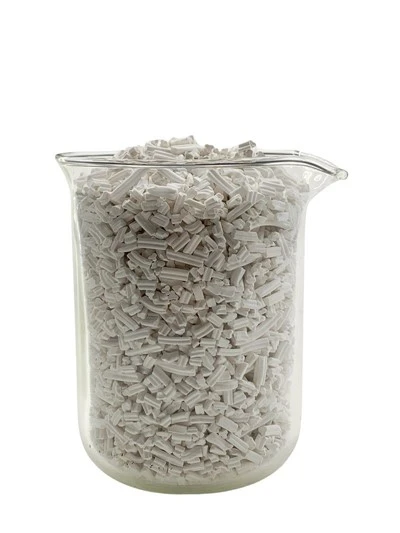
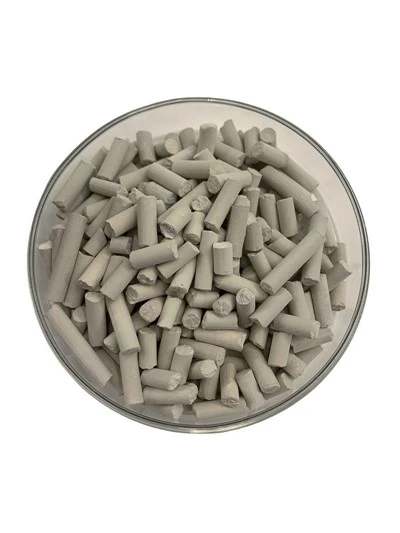
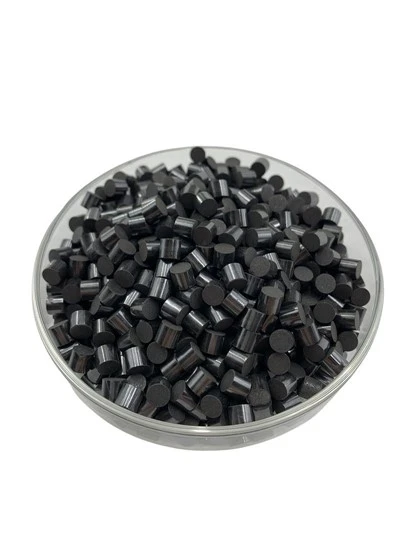
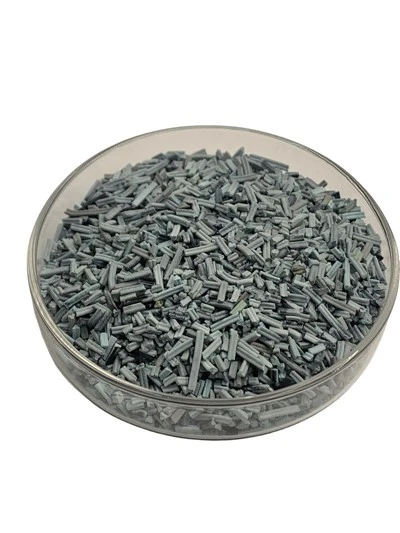
Heavy Feed FCC Pretreatment Catalyst is a supported hydrotreating catalyst engineered for fixed-bed installation upstream of fluid catalytic cracking units. It processes heavy refinery feedstocks to optimize hydrocarbon quality before catalytic cracking.
Selection is determined by feed sulfur, nitrogen, metals, Conradson Carbon Residue (CCR), boiling range, and unit operating severity. Catalyst configurations can be tailored for hydrodesulfurization (HDS), hydrodenitrogenation (HDN), hydrodemetallization (HDM), or specific contaminant tolerance.
Target feedstocks include heavy vacuum gas oil, deep-cut VGO, coker-derived gas oils, and high-contaminant streams where sulfur, nitrogen, nickel, vanadium, or asphaltenes affect downstream performance.
Catalyst Selection Guide by Feed Condition
|
Feed / Operating Condition |
Primary Selection Priority |
Typical Catalyst Solution |
|
High Sulfur FCC Feed |
Maximum HDS activity and stability |
CoMo or NiMo supported system |
|
High Nitrogen VGO |
Deep HDN capability |
Optimized active metal balance |
|
High Nickel / Vanadium Feed |
High HDM capacity and pore-mouth tolerance |
Guard bed and graded pore structure |
|
High-Boiling / Heavy Molecules |
Optimized pore size distribution and diffusion pathways |
Macro-pore engineered carriers |
|
High CCR Content |
Fouling resistance and structural resilience |
High void-fraction extrudates |
|
Coker-Derived Blends |
Silicon, metals, and contaminant tolerance |
Customized multi-metal formulation |
|
High-Pressure Unit |
High-activity transition metal sulfide systems |
Ni-Mo based high-severity formulation |
|
Lower-Pressure Unit |
CoMo-based active phase configurations |
Co-Mo standard hydrorefining grade |
Core Reaction Functions
Hydrodesulfurization (HDS)
Converts sulfur-bearing compounds into hydrocarbons and hydrogen sulfide using hydrogen gas, reducing the sulfur load carried into the cracking stage. Required activity levels depend on feed sulfur content, target outlet specs, reactor pressure, temperature, liquid hourly space velocity (LHSV), and hydrogen partial pressure.
Hydrodenitrogenation (HDN)
Removes nitrogen compounds that otherwise act as temporary or permanent poisons to cracking catalysts. HDN optimization is critical when processing nitrogen-rich VGO, heavy coker gas oils, or blended refractory stocks.
Hydrodemetallization (HDM)
Targeted at removing nickel and vanadium. Heavy feedstocks require carefully balanced pore structures and high metals-holding capacity to prevent premature pore mouth plugging and catalyst deactivation. Guard beds or multi-catalyst grading systems are frequently deployed ahead of deep hydrotreating beds.
Hydrogenation and Aromatic Saturation
Saturates aromatic rings and multi-ring structures, enhancing hydrogen-to-carbon ratios, improving feed density, and optimizing downstream product distribution.
Catalyst Cycle Life and Regeneration
Deactivation Control
Engineered pore structures minimize pore mouth plugging caused by heavy asphaltenes and nickel/vanadium deposition.
Operating Stability
Formulated for long cycle lengths under high-severity refinery conditions.
Regeneration Compatibility
Supports standard commercial regeneration protocols where applicable, depending on unit design and metal accumulation levels.
Manufacturing and Quality Assurance
Catalyst production utilizes automated Distributed Control Systems (DCS) to monitor precursor impregnation, drying, calcination, and extrusion stages.
Batch Testing: Verification of surface area, pore distribution, chemical composition, bulk density, and crush strength prior to release.
Traceability: Lot-specific inspection documentation supplied with commercial shipments.
Handling and Loading Guidelines
Inspect packaging integrity prior to unsealing.
Minimize mechanical dropping or sliding of drums and jumbo bags to prevent particle attrition and fines generation.
Screen catalyst particles during loading if required by unit specifications to maintain clean void fractions.
Comply with standard confined space entry and personal protective equipment protocols during reactor loading.
Packaging Options: Heavy-duty steel drums and industrial jumbo bags designed for ocean freight and long-distance transit.
Storage, Preservation, and Shelf-Life Guidelines
Unopened catalyst drums and industrial jumbo bags must be stored in dry, well-ventilated indoor warehouses protected from direct moisture, extreme humidity, and corrosive chemical vapors.
Properly stored catalyst maintains its chemical stability and physical strength for extended storage periods. Pallets should be stacked securely without exceeding maximum recommended tier limits to prevent container crushing or damage to the inner moisture barrier liners.
FAQ
Q: How does feed silicon or iron contamination impact catalyst selection, and how is it managed?
A: Coker-derived streams or delayed coker gas oils often contain trace silicon from antifoam agents and iron particulates. Silicon permanently poisons active catalytic sites, while iron deposits on pore mouths and accelerates pressure drop. When processing silicon- or iron-laden feeds, the catalyst system requires modified guard layers with specialized macroporous structures to trap contaminants before they reach the main HDS/HDN active zones.
Q: Can this catalyst be loaded as a direct replacement in existing commercial hydrotreating units without reactor modification?
A: Yes. Catalyst particle dimensions, such as standard cylinders, trilobes, or customized geometries, and bulk density are engineered to match standard fixed-bed loading practices. This ensures that pressure drop, void fraction, and liquid distribution remain compatible with existing reactor internals, quench zones, and grading baskets.
Q: What is the standard procedure for sulfurization and activation prior to feedstock introduction?
A: Hydrotreating catalysts typically require in-situ or ex-situ presulfurization to convert metal oxides into active metal sulfide phases. Standard startup procedures involve drying, wet-spiking or gas-phase sulfiding using dimethyl disulfide or equivalent sulfiding agents under controlled temperature ramps and hydrogen circulation to achieve maximum initial catalytic activity.
Q: How are batch-to-batch physical and chemical variations controlled during manufacturing?
A: Production utilizes DCS-monitored impregnation, automated calcination, and strict quality control protocols. Every manufacturing lot undergoes independent testing for surface area, pore volume, active metal dispersion, bulk density, and single-pellet crushing strength, with lot-specific certificates of analysis provided prior to dispatch.
Hot Tags: heavy feed fcc pretreatment catalyst, China heavy feed fcc pretreatment catalyst manufacturers, suppliers, factory, hydrorefining catalyst for advanced biofuels, hydrorefining catalyst for benzene production, hydrorefining catalyst for emerging industries, hydrorefining catalyst for energy sector, hydrorefining catalyst for low sulfur gasoline production, hydrorefining catalyst for meeting fuel standards