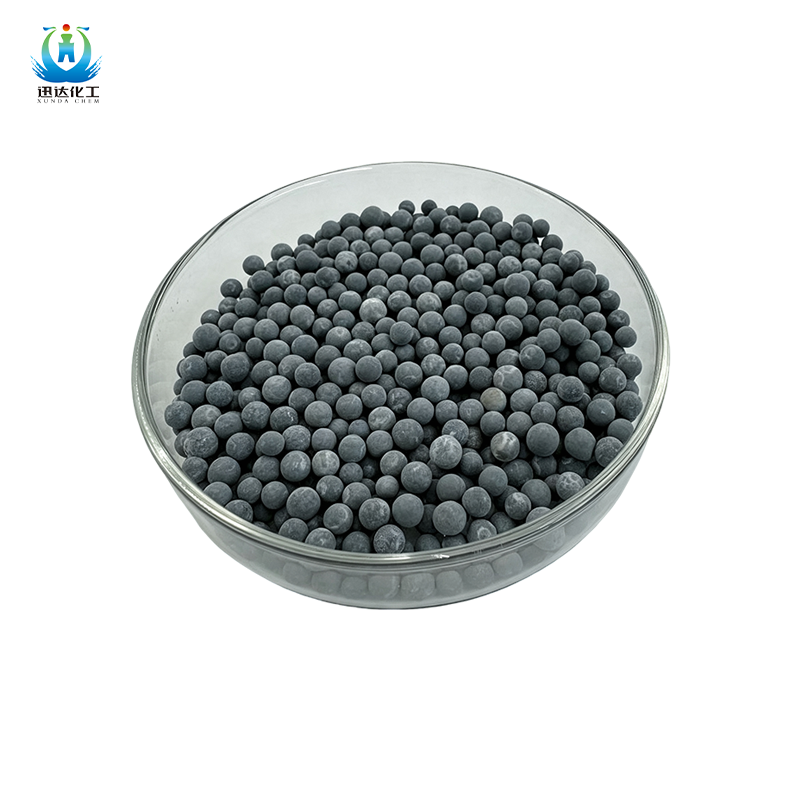
In the complete industrial sulfur recovery system, the conventional Claus process can realize the primary recovery of most sulfur components, but limited by chemical equilibrium and reaction conditions, a small amount of unreacted Hydrogen Sulfide, sulfur dioxide and residual Organic‑sulfur Compound will still remain in the tail gas. If not treated deeply, these sulfur pollutants will not only cause waste of sulfur resources, but also lead to excessive flue gas emissions. Therefore, the completeClaus Tail Gas Treatment system has become an essential part of industrial environmental protection production, and Hydrogenation Catalyst, especially professional Tail Gas Hydrogenation Catalyst, has become the core key to deep purification of tail gas and full standard discharge of SRU(Sulfur Recovery Unit). Cooperating with high-efficiency Sulfur Recovery Catalyst and other industrial catalysts , it builds a full-process sulfur recovery and tail Gas purification system to maximize resource recovery and environmental protection benefits.
Different from Claus Process Catalyst used for main process conversion, the core function of Tail Gas Hydrogenation Catalyst is to realize secondary reduction and deep conversion of residual sulfur components in Claus tail gas. The tail gas produced by the main unit of SRU(Sulfur Recovery Unit) contains a variety of complex sulfur substances that cannot be completely converted by the Claus process, including residual sulfur dioxide, unreacted hydrogen sulfide, and stable Organic‑sulfur Compound such as COS and CS₂. These substances have stable molecular structure and difficult conventional decomposition, which is the main reason for the insufficient overall sulfur recovery rate of the device and excessive tail gas emissions. The high-performance Hydrogenation Catalyst can efficiently catalyze the hydrogenation reduction reaction in the tail gas treatment reactor, convert all types of sulfur-containing components into Hydrogen Sulfide again, and then send them back to the main Claus unit for secondary cycle recovery, completely solving the problem of residual sulfur in tail gas.
The structural design and performance advantages of professional tail gas hydrogenation catalytic materials are highly adapted to the harsh operating environment of industrial tail gas treatment. The Catalyst Bed filled with Tail Gas Hydrogenation Catalyst needs to work stably for a long time in high-temperature, high-humidity and dust-containing complex gas environments, and resist the impact of trace impurities such as heavy hydrocarbons and sulfides. The upgradedHydrogenation Catalyst adopts high-strength inert carrier and multi-element composite active components, with high hydrogenation activity, strong anti-toxicity and excellent thermal stability. It can maintain efficient catalytic reduction ability under variable load and fluctuating gas composition conditions, ensure thorough hydrogenation conversion of all residual sulfur components, and lay a foundation for the full recovery of Elemental Sulfur.
The coordinated operation of Sulfur Recovery Catalyst in the main process and Hydrogenation Catalyst in the tail gas section forms a closed-loop full-cycle treatment mode of SRU(Sulfur Recovery Unit). In the main reaction stage,Claus Process Catalyst efficiently converts most Hydrogen Sulfide into elemental sulfur products; in the tail gas purification stage, Tail Gas Hydrogenation Catalyst performs deep hydrogenation reduction on residual sulfur compounds to realize secondary recycling. This two-stage catalytic linkage mode completely breaks the conversion limit of a single Claus process, greatly improves the overall sulfur resource recovery rate of the device, and makes the purity of recycled Elemental Sulfur higher and the industrial utilization value greater.
In terms of environmental protection benefits, the perfect matching of the two types of high-performance catalysts realizes ultra-low emission of Claus Tail Gas Treatment. After deep hydrogenation and cyclic recovery treatment, the sulfur content in the final discharged flue gas is far lower than the strictest international environmental protection standards, helping chemical enterprises solve the problem of flue gas emission compliance. At the same time, the efficient cyclic recovery mode reduces the waste of sulfur resources, realizes the reuse of industrial waste gas, conforms to the global green chemical development concept of energy saving, emission reduction and resource recycling, and effectively reduces the environmental protection pressure and resource consumption cost of enterprises.
Market application feedback shows that the integrated catalytic scheme composed of Sulfur Recovery Catalyst and Tail Gas Hydrogenation Catalyst has been successfully applied in a large number of large-scale petrochemical and natural gas purification projects. Compared with the traditional single-process treatment scheme, the overall sulfur recovery efficiency of the device is significantly improved, the failure rate of the Catalyst Bed is reduced, and the service cycle of catalytic materials is prolonged. The stable and efficient catalytic performance reduces the frequency of catalyst replacement and equipment maintenance, and effectively saves the long-term operation cost of enterprise SRU(Sulfur Recovery Unit).
Industry insiders said that full-cycle precise catalysis and full-resource recovery will be the inevitable development direction of industrial sulfur recovery technology in the future. The complementary advantages of Claus Process Catalyst and Hydrogenation Catalyst will continue to empower the upgrading of Claus Tail Gas Treatment technology. Continuous optimization of high-efficiency, anti-toxic and long-life catalysts will further improve the resource utilization rate of industrial sulfur-containing waste gas, help the global chemical industry achieve higher-level green and low-carbon development, and create greater economic and environmental value for industrial environmental protection production.